[Aware Insight 04] Aware's Localization Competitiveness That Imported Machines Cannot Match
[Aware Insight 04] Aware's Localization Competitiveness That Imported Machines Cannot Match
Insights
Insights
Insights
|
|
Fully Automatic Coffee Machine Market, Where 'Imported' is Still the Default
When opening a new cafe or replacing an old machine, the brands that buyers first put on their review table are usually fixed. More than 90% are machines made in Switzerland or Germany, such as WMF, Eversys, Thermoplan, and Jura, while the rest are occupied by Chinese-made machines like Dr. Coffee.
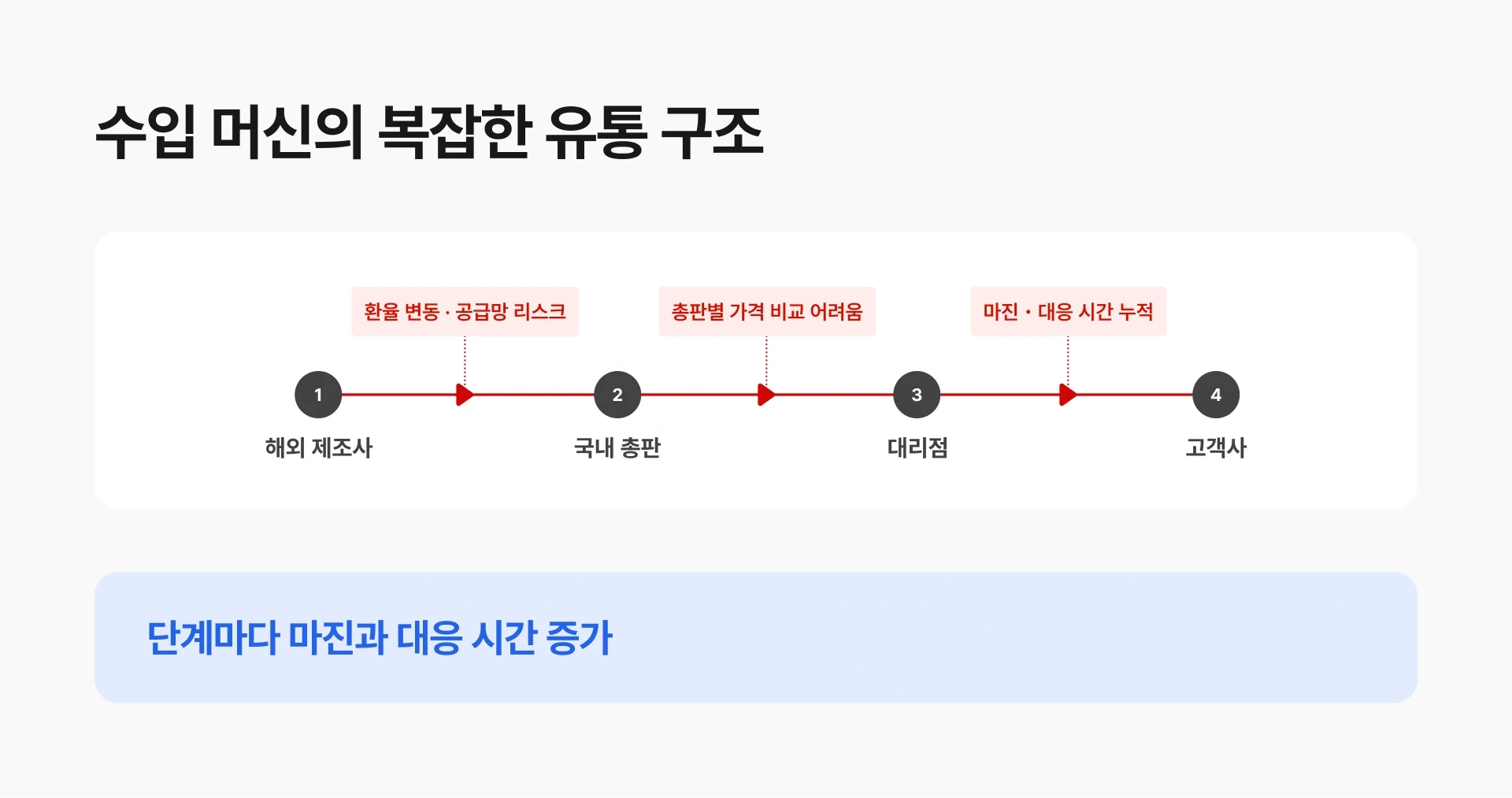
In fact, if you look at the commercial fully automatic espresso machines distributed in Korea, the structure in which distributors and wholesalers each handle one or two European brands is clearly revealed. The manufacturer is abroad, and inside Korea, there are only multiple layers of import distribution networks that bring in and sell those products.
This structure leads to three problems for reviewers. First, exchange rate fluctuations and global supply chain issues are immediately reflected in the initial unit price. Second, since distributors are split by brand, price comparison and bargaining power are reduced. Third, when a problem occurs, margins and response times accumulate at every stage of the distribution chain, which flows from 'overseas headquarters — domestic exclusive distributor — agency — customer (or franchise headquarters)'. This risk is most clearly revealed in the final point, namely maintenance costs and A/S response speed in case of failure.

The Absence of Commercial Domestically Produced Machines
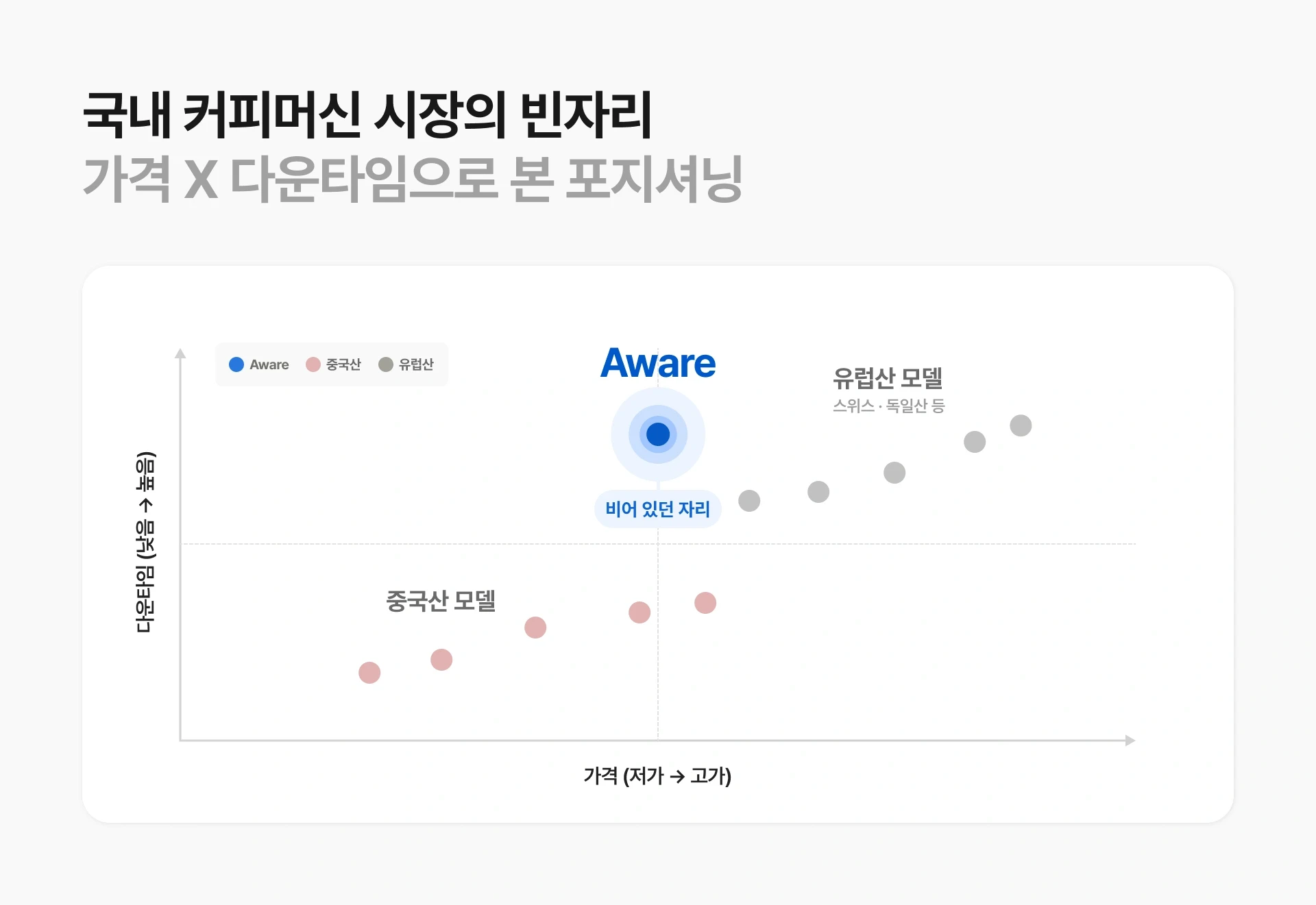
Currently, the commercial fully automatic coffee machine market is bisected by European and Chinese brands, while domestic brands are non-existent. The problem is that imported products do not provide sufficient choices for customers.
When choosing a coffee machine product, you must consider two types of costs: not only the initial cost but also the post-purchase cost. If you plan to run a business using a coffee machine, you need to calculate post-purchase costs well, such as maintenance costs and losses due to downtime. However, there is currently no model in the market that satisfies both at the same time. European machines, which are mainly classified as high-end, are highly priced due to their distribution structure, while Chinese machines are relatively inexpensive but can cause significant losses due to downtime.
In other words, the domestic coffee machine market is divided into the extreme ends of 'low-priced Chinese' and 'high-priced European', leaving a vacant position in between. Aware is a product created to target exactly this empty space.
Cafe Operation Risks Imposed by Imported Machines
① Excessive Maintenance Costs of Modular Machines.
Currently, most high-end fully automatic machines, namely European machines, are designed by grouping core functions into modular units to reduce field downtime. However, paradoxically, this design increases maintenance costs. This is because even if a single specific part breaks down, the entire module must be replaced rather than undergoing individual repairs. Furthermore, because they use proprietary standards, there are no aftermarket compatible parts, leaving the burden of having to use only genuine parts from engineers certified by the headquarters.
② Delayed Parts Supply and Downtime.
Imported machines take more time to supply the necessary parts compared to domestic machines. In particular, agencies of cheap Chinese brands often minimize spare parts inventory to lower inventory burdens, and it can take weeks to obtain new parts. As a result, delays in A/S response occur frequently, leading directly to gaps in business operation, which means increased operating losses.
③ Product Discontinuation Risk
For imported products, there are cases where the product itself is discontinued or the agency stops supply due to policy reasons. To increase stores or add more machines, you might have to look into a completely different machine rather than the one you are currently using. Chinese brands have a short launch and discontinuation cycle for new models, making the risk even greater.
④ The Pitfall of Unauthorized A/S.
Many machine manufacturers and distributors restrict the use of non-certified parts or unauthorized service centers in contracts and service policies. Non-standard parts can lead to the operational risk of repetitive breakdowns, and the same goes for repairs carried out without a proper understanding of the product. However, if the agency, which is the A/S entity, stops supplying the brand or product, users have no choice but to rely on private centers. Even if you choose direct purchase to lower the high cost of imported machines even slightly, there are limitations on certified A/S.
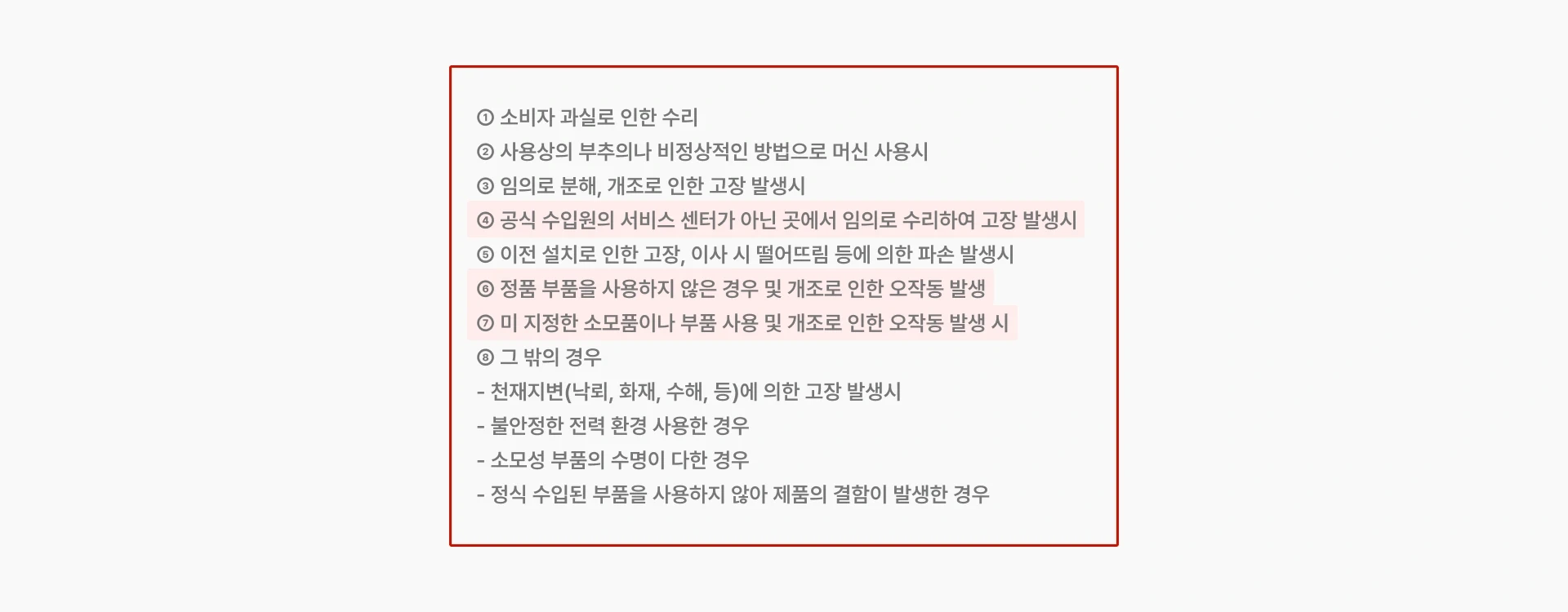
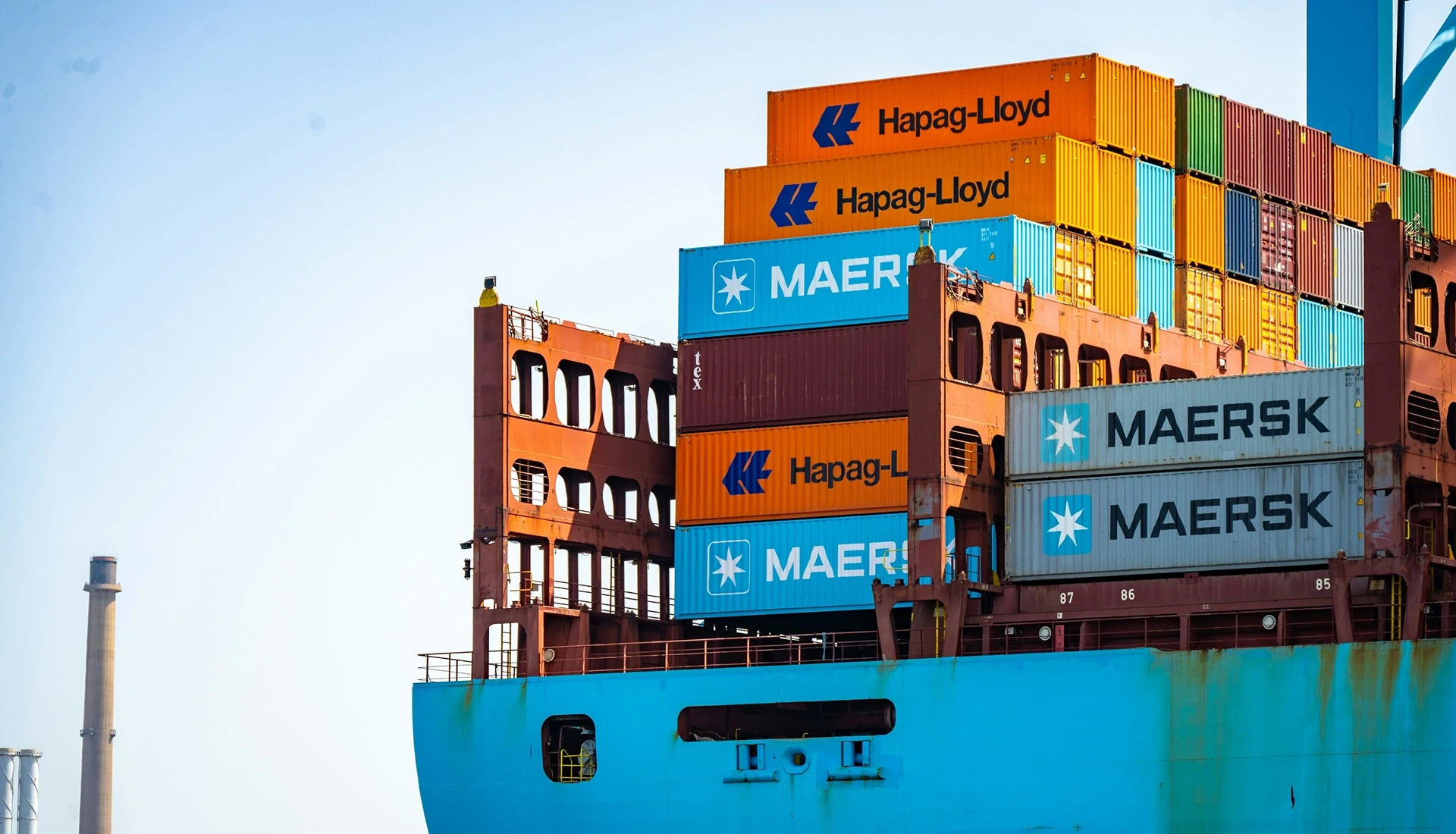
▲ (Source: Doing International)
All four risks lead to the same conclusion. The time a store stops operating (downtime) and the cost to cover that time depend more on the maintenance structure than on the performance of the machine itself.
The Value Created by the Domestic Machine, Aware
Aware claims to be the 'first cloud-based fully automatic coffee machine in Korea', directly addressing the structural weaknesses of imported machines pointed out above. Based on 100% domestic development and manufacturing, it removed distribution margins to reasonably lower the initial purchase price, and created a structure that saves cost and time even after its introduction.
1) Price Competitiveness of Domestic Machines
Aware, a domestically manufactured machine, provides overwhelming price competitiveness through a 'direct supply structure' that eliminates complex distribution processes. This is because it boldly eliminated the import distributor's margin and the agency's middle distribution margin, which are inevitably generated when introducing imported equipment.
The benefits of this direct supply structure are further maximized when introduced in multiple locations. Since the unit price per machine is significantly lowered when introduced in multiple stores, those planning to expand to dozens of stores will feel a huge cost-saving effect proportional to the number of stores. For franchise headquarters, the initial franchise fee can be significantly lowered, giving them a much more favorable position in recruiting franchisees.
As a result, Aware's bubble-free distribution structure creates a groundbreaking initial price difference of up to over 10 million KRW per unit when compared to European high-end machines of the same class.
2) Maintenance Costs at 1/10 of the Level
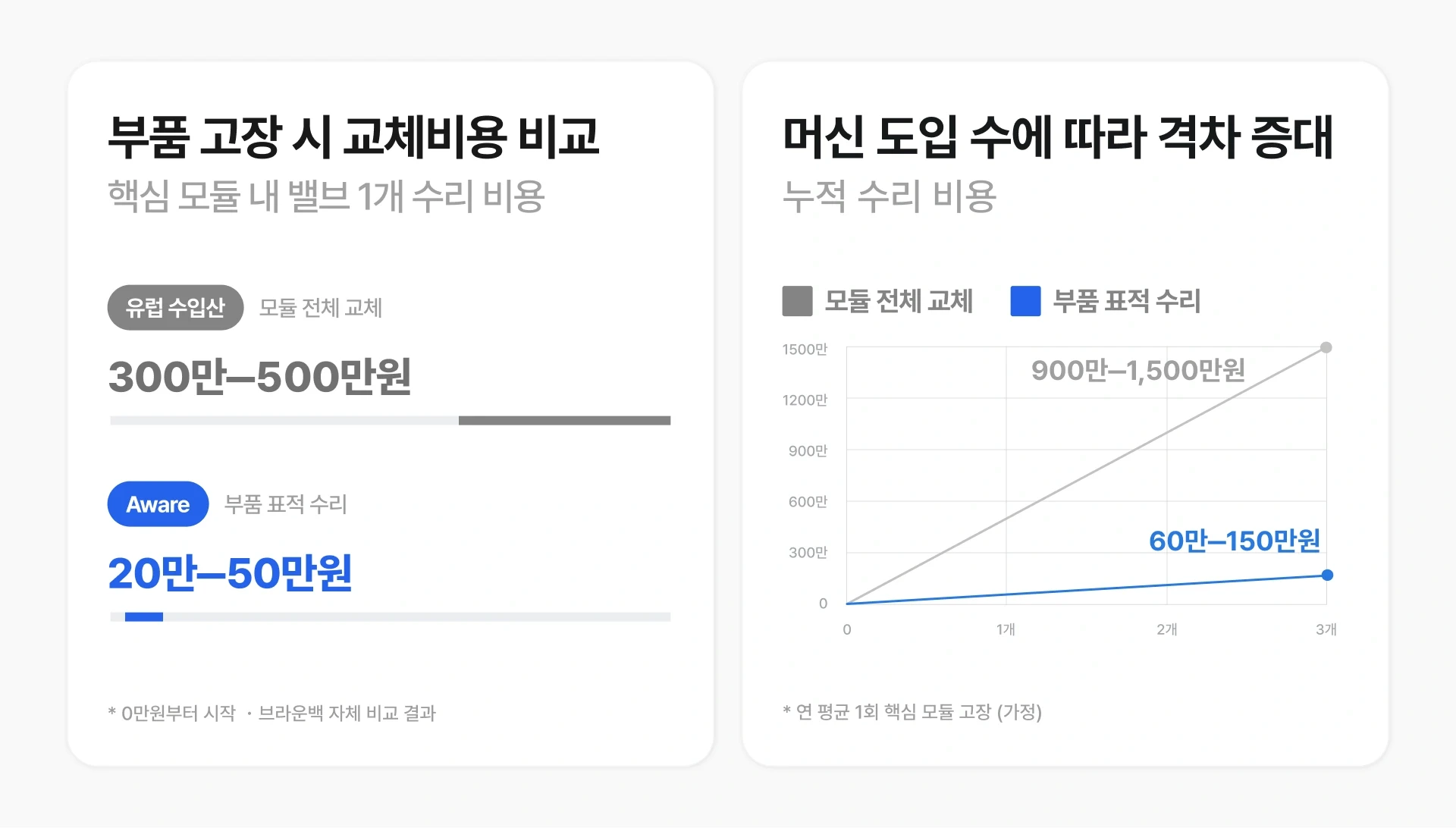
Aware is designed to be repaired at the individual part level, not at the module level. Thanks to this design, Aware customers can dramatically reduce repair costs. According to Brownbag's own comparison, when a major part inside a core module of a European high-end machine breaks down, replacing the entire module costs 3 million to 5 million KRW. On the other hand, Aware's targeted repair of individual parts was resolved in the range of 200,000 to 500,000 KRW.
If a cafe is large or has high demand during peak times, it will adopt multiple machines. Assuming a store operates three machines and the core module breaks down once per machine over 5 years, the entire module replacement method costs more than 9 million to 15 million KRW (3 units × 3 million to 5 million KRW). If addressed with targeted part repairs, it only costs 600,000 to 1.5 million KRW (3 units × 200,000 to 500,000 KRW). (The actual frequency of breakdown varies depending on the store and usage.)
3) Direct A/S from Manufacturer Without Wasted Cost and Time
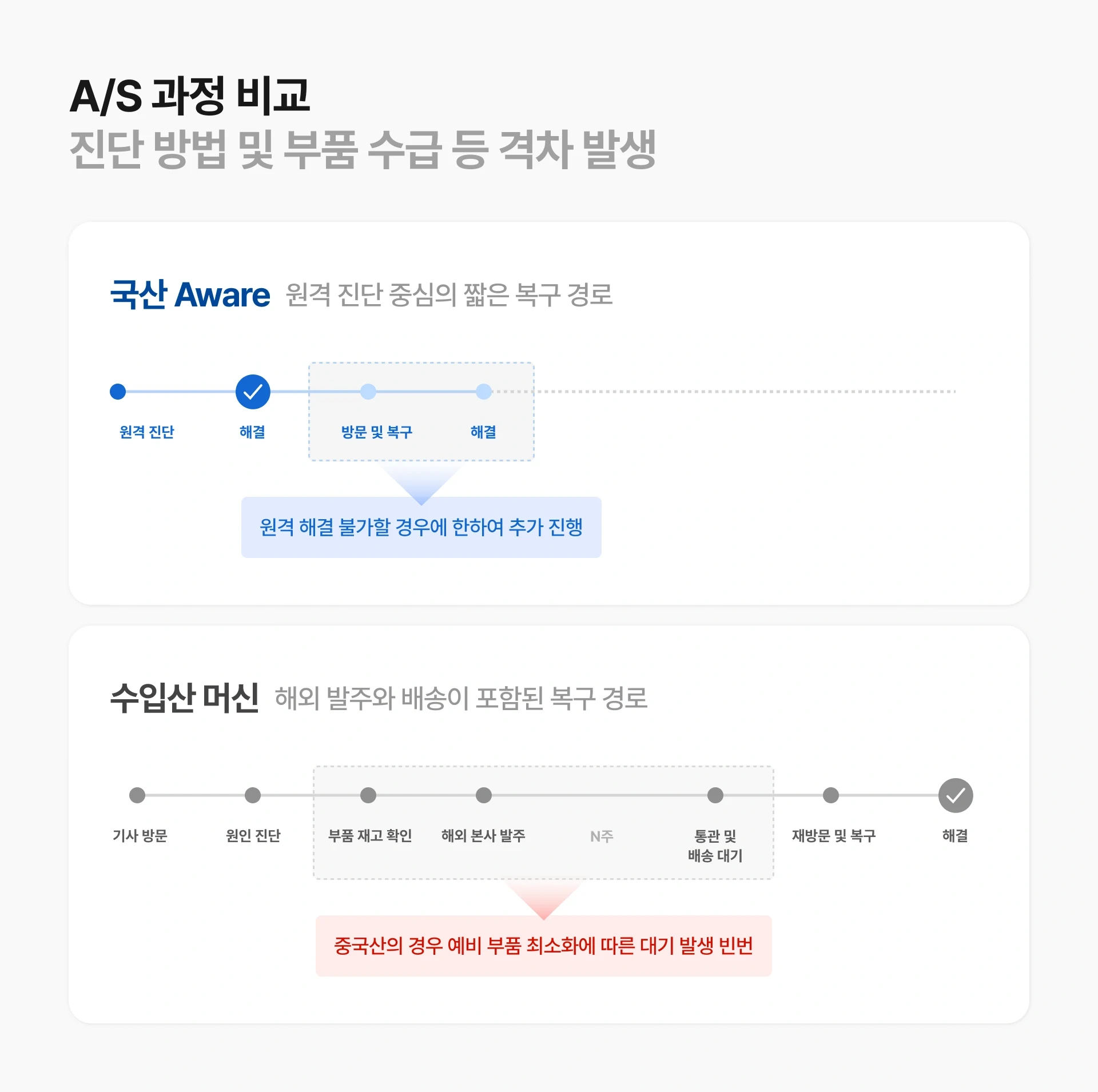
Generally, when an operating error occurs in a coffee machine, a repair technician visits to conduct an inspection. At this time, if the cause of the malfunction is determined to be simple customer negligence, a call-out fee is charged. In fact, such simple human errors account for the largest portion of coffee machine A/S requests. Particularly in the early stages of using a machine, simple operational mistakes occur most frequently, such as not completely locking parts after cleaning, or not unlocking the hopper and water supply valve, causing stores to spend heavily on unnecessary expenses like frequent call-out fees.
Aware's remote diagnosis service easily solves these situations. Aware saves data generated during each extraction (concentration, pressure, flow rate, pump duty, etc.) in real-time through its own cloud. Aware team experts use this data as a clue to accurately check the machine's condition, identify the cause, and provide a clear solution guide so that users can easily maintain it themselves on-site.
As a result, it drastically reduces the frequency of unnecessary A/S visits caused by simple errors, minimizing the downtime spent waiting for a technician to arrive and the expensive call-out fees. Even if there are some foreign brands that provide cloud functions, domestic distributors have limited access to data, making remote diagnosis virtually difficult. However, since the manufacturer directly manages the data for Aware, immediate and practical remote support is possible.
4) Stability of Parts Supply
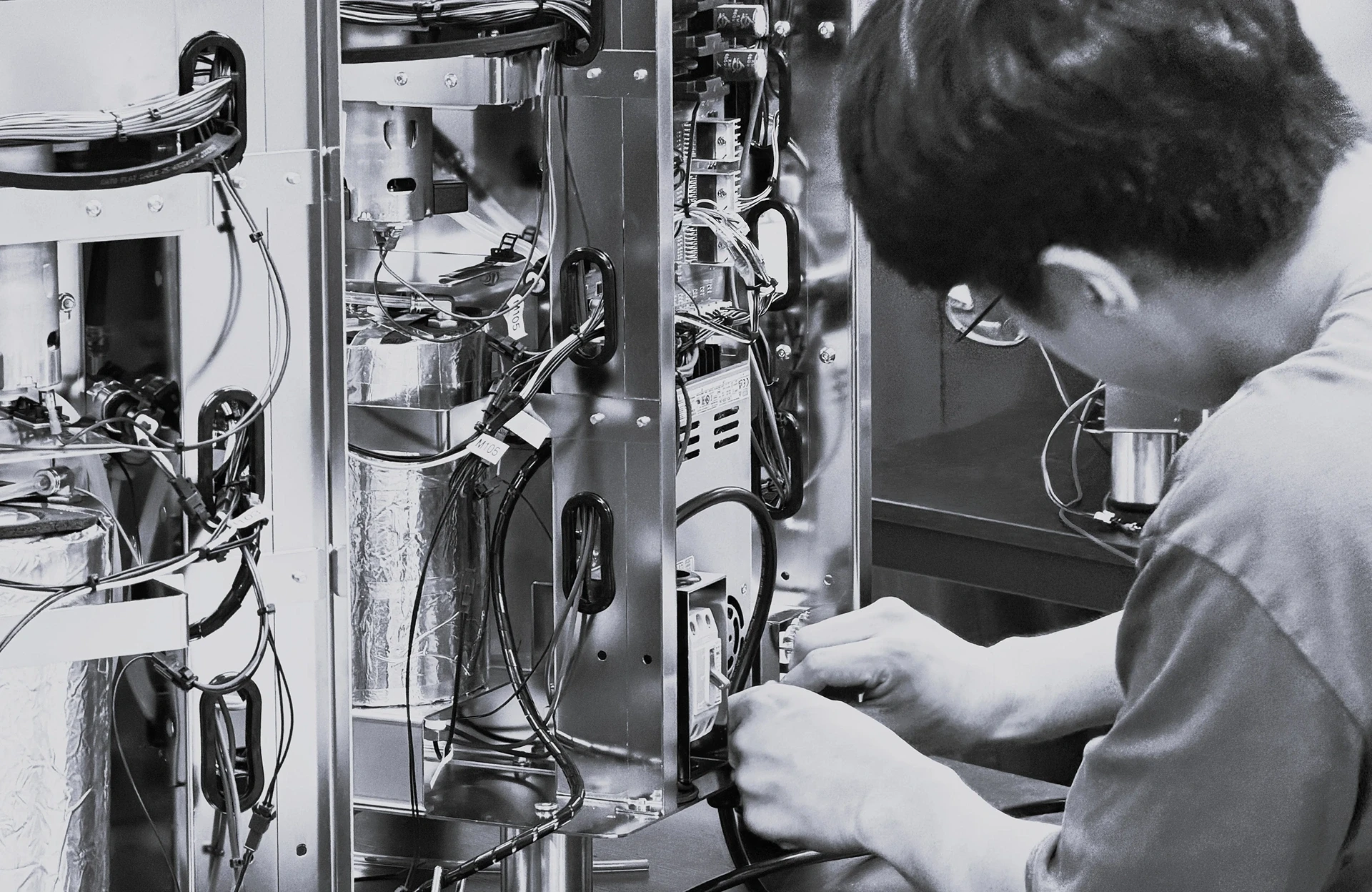
Another big benefit obtained by having the manufacturer directly take responsibility for A/S is the excellent 'stability of parts supply'. Basically, the manufacturer manages safety stock for production and safety stock for A/S at the same time. Because of this, they inevitably have an overwhelmingly larger amount of parts in stock compared to distributors who simply bring in and sell finished products.
Therefore, unlike distributors of foreign imported brands or Chinese brands, there is no need to wait endlessly for parts to be supplied from overseas when an A/S issue occurs. Naturally, situations where the repair period stretches to several weeks due to a lack of parts inventory, affecting store operations, do not occur.
Above all, you can rest assured because the parts retention period is definitively guide-mapped based on the product's useful life. You are also completely free from the risk of having to rely on unstable private A/S because you cannot find parts due to product discontinuation or supply suspension caused by the termination of a distributor's contract.
'Domestic vs Chinese vs European' at a Glance
Comparison Item | Chinese | Aware (Domestic) | European |
|---|---|---|---|
Manufacturing & Distribution Structure | Complex (Manufactured in China → Domestic Distributor → Agency → Customer) | Simple (Domestic Manufacturing and Direct Distribution) | Complex (Manufactured in Europe → Domestic Distributor → Agency → Customer) |
Initial Introduction Cost (CAPEX) | Low (Multi-stage margins present) | Medium (Minimized distribution margins) | High (Reflecting exchange rates & multi-stage margins, relatively high) |
Commercial Responsiveness (Performance) | Low | High | High |
Repair Method | Mainly entire module replacement | Targeted repair of individual parts | Mainly entire module replacement |
Cost of Core Parts Replacement | Between European and Domestic | 200,000 ~ 500,000 KRW | Approx. 3 million ~ 5 million KRW per case |
A/S Response Speed | Slow (Takes weeks to source new parts) | Fast (Remote diagnosis proceeds first) | Average (On-site diagnosis required) |
A/S Stability | Risk of product/part discontinuation exists + Official A/S excluded for parallel imports | Stable domestic direct A/S + Long-term parts supply guaranteed | Official A/S excluded for parallel imports |
Warranty | Varies by brand and distributor | 1-year free warranty (excluding customer negligence) | Varies by brand and distributor |
Closing
When introducing fully automatic coffee machines, the grammar of 'High-end = Imported' has long been taken for granted. However, we can see that what cafe operators actually need, such as quick A/S and reasonable maintenance costs, comes not from the brand's country of origin but from the manufacturing, distribution, and service structure. Aware is the result of bringing that structure directly to Korea and redesigning it.
As the manufacturer of the domestic machine Aware, Brownbag regards 'sustainable partnership' as an important customer value that can differentiate it from imported brands. In addition to rapidly improving hardware design to enhance the convenience of domestic users and the stability of the machine, it provides software that Koreans can intuitively and easily use, updating it in line with the trends of the times and field needs. In particular, useful features are constantly being added based on users' actual machine operation data and VOC.
Regarding the reason for insisting on domestic manufacturing, Brownbag CEO Jong-soo Son explained, "In the end, to fully take responsibility for 'A to Z of customer experience', we decided to personally make a machine with a 'brain (cloud)'." He added, "Letting technology take over repetitive high-intensity labor, and letting people focus on creative tasks such as service or menu planning, is the essence of automation pursued by Aware."
In this way, Aware is directly responsible for the entire process from manufacturing to A/S and software advancement, with the goal of providing practical value to customers. Experience the next-level structure made by Brownbag, and become a partner drawing sustainable growth with Aware.
Fully Automatic Coffee Machine Market, Where 'Imported' is Still the Default
When opening a new cafe or replacing an old machine, the brands that buyers first put on their review table are usually fixed. More than 90% are machines made in Switzerland or Germany, such as WMF, Eversys, Thermoplan, and Jura, while the rest are occupied by Chinese-made machines like Dr. Coffee.
In fact, if you look at the commercial fully automatic espresso machines distributed in Korea, the structure in which distributors and wholesalers each handle one or two European brands is clearly revealed. The manufacturer is abroad, and inside Korea, there are only multiple layers of import distribution networks that bring in and sell those products.
This structure leads to three problems for reviewers. First, exchange rate fluctuations and global supply chain issues are immediately reflected in the initial unit price. Second, since distributors are split by brand, price comparison and bargaining power are reduced. Third, when a problem occurs, margins and response times accumulate at every stage of the distribution chain, which flows from 'overseas headquarters — domestic exclusive distributor — agency — customer (or franchise headquarters)'. This risk is most clearly revealed in the final point, namely maintenance costs and A/S response speed in case of failure.
The Absence of Commercial Domestically Produced Machines
Currently, the commercial fully automatic coffee machine market is bisected by European and Chinese brands, while domestic brands are non-existent. The problem is that imported products do not provide sufficient choices for customers.
When choosing a coffee machine product, you must consider two types of costs: not only the initial cost but also the post-purchase cost. If you plan to run a business using a coffee machine, you need to calculate post-purchase costs well, such as maintenance costs and losses due to downtime. However, there is currently no model in the market that satisfies both at the same time. European machines, which are mainly classified as high-end, are highly priced due to their distribution structure, while Chinese machines are relatively inexpensive but can cause significant losses due to downtime.
In other words, the domestic coffee machine market is divided into the extreme ends of 'low-priced Chinese' and 'high-priced European', leaving a vacant position in between. Aware is a product created to target exactly this empty space.
Cafe Operation Risks Imposed by Imported Machines
① Excessive Maintenance Costs of Modular Machines.
Currently, most high-end fully automatic machines, namely European machines, are designed by grouping core functions into modular units to reduce field downtime. However, paradoxically, this design increases maintenance costs. This is because even if a single specific part breaks down, the entire module must be replaced rather than undergoing individual repairs. Furthermore, because they use proprietary standards, there are no aftermarket compatible parts, leaving the burden of having to use only genuine parts from engineers certified by the headquarters.
② Delayed Parts Supply and Downtime.
Imported machines take more time to supply the necessary parts compared to domestic machines. In particular, agencies of cheap Chinese brands often minimize spare parts inventory to lower inventory burdens, and it can take weeks to obtain new parts. As a result, delays in A/S response occur frequently, leading directly to gaps in business operation, which means increased operating losses.
③ Product Discontinuation Risk
For imported products, there are cases where the product itself is discontinued or the agency stops supply due to policy reasons. To increase stores or add more machines, you might have to look into a completely different machine rather than the one you are currently using. Chinese brands have a short launch and discontinuation cycle for new models, making the risk even greater.
④ The Pitfall of Unauthorized A/S.
Many machine manufacturers and distributors restrict the use of non-certified parts or unauthorized service centers in contracts and service policies. Non-standard parts can lead to the operational risk of repetitive breakdowns, and the same goes for repairs carried out without a proper understanding of the product. However, if the agency, which is the A/S entity, stops supplying the brand or product, users have no choice but to rely on private centers. Even if you choose direct purchase to lower the high cost of imported machines even slightly, there are limitations on certified A/S.
▲ (Source: Doing International)
All four risks lead to the same conclusion. The time a store stops operating (downtime) and the cost to cover that time depend more on the maintenance structure than on the performance of the machine itself.
The Value Created by the Domestic Machine, Aware
Aware claims to be the 'first cloud-based fully automatic coffee machine in Korea', directly addressing the structural weaknesses of imported machines pointed out above. Based on 100% domestic development and manufacturing, it removed distribution margins to reasonably lower the initial purchase price, and created a structure that saves cost and time even after its introduction.
1) Price Competitiveness of Domestic Machines
Aware, a domestically manufactured machine, provides overwhelming price competitiveness through a 'direct supply structure' that eliminates complex distribution processes. This is because it boldly eliminated the import distributor's margin and the agency's middle distribution margin, which are inevitably generated when introducing imported equipment.
The benefits of this direct supply structure are further maximized when introduced in multiple locations. Since the unit price per machine is significantly lowered when introduced in multiple stores, those planning to expand to dozens of stores will feel a huge cost-saving effect proportional to the number of stores. For franchise headquarters, the initial franchise fee can be significantly lowered, giving them a much more favorable position in recruiting franchisees.
As a result, Aware's bubble-free distribution structure creates a groundbreaking initial price difference of up to over 10 million KRW per unit when compared to European high-end machines of the same class.
2) Maintenance Costs at 1/10 of the Level
Aware is designed to be repaired at the individual part level, not at the module level. Thanks to this design, Aware customers can dramatically reduce repair costs. According to Brownbag's own comparison, when a major part inside a core module of a European high-end machine breaks down, replacing the entire module costs 3 million to 5 million KRW. On the other hand, Aware's targeted repair of individual parts was resolved in the range of 200,000 to 500,000 KRW.
If a cafe is large or has high demand during peak times, it will adopt multiple machines. Assuming a store operates three machines and the core module breaks down once per machine over 5 years, the entire module replacement method costs more than 9 million to 15 million KRW (3 units × 3 million to 5 million KRW). If addressed with targeted part repairs, it only costs 600,000 to 1.5 million KRW (3 units × 200,000 to 500,000 KRW). (The actual frequency of breakdown varies depending on the store and usage.)
3) Direct A/S from Manufacturer Without Wasted Cost and Time
Generally, when an operating error occurs in a coffee machine, a repair technician visits to conduct an inspection. At this time, if the cause of the malfunction is determined to be simple customer negligence, a call-out fee is charged. In fact, such simple human errors account for the largest portion of coffee machine A/S requests. Particularly in the early stages of using a machine, simple operational mistakes occur most frequently, such as not completely locking parts after cleaning, or not unlocking the hopper and water supply valve, causing stores to spend heavily on unnecessary expenses like frequent call-out fees.
Aware's remote diagnosis service easily solves these situations. Aware saves data generated during each extraction (concentration, pressure, flow rate, pump duty, etc.) in real-time through its own cloud. Aware team experts use this data as a clue to accurately check the machine's condition, identify the cause, and provide a clear solution guide so that users can easily maintain it themselves on-site.
As a result, it drastically reduces the frequency of unnecessary A/S visits caused by simple errors, minimizing the downtime spent waiting for a technician to arrive and the expensive call-out fees. Even if there are some foreign brands that provide cloud functions, domestic distributors have limited access to data, making remote diagnosis virtually difficult. However, since the manufacturer directly manages the data for Aware, immediate and practical remote support is possible.
4) Stability of Parts Supply
Another big benefit obtained by having the manufacturer directly take responsibility for A/S is the excellent 'stability of parts supply'. Basically, the manufacturer manages safety stock for production and safety stock for A/S at the same time. Because of this, they inevitably have an overwhelmingly larger amount of parts in stock compared to distributors who simply bring in and sell finished products.
Therefore, unlike distributors of foreign imported brands or Chinese brands, there is no need to wait endlessly for parts to be supplied from overseas when an A/S issue occurs. Naturally, situations where the repair period stretches to several weeks due to a lack of parts inventory, affecting store operations, do not occur.
Above all, you can rest assured because the parts retention period is definitively guide-mapped based on the product's useful life. You are also completely free from the risk of having to rely on unstable private A/S because you cannot find parts due to product discontinuation or supply suspension caused by the termination of a distributor's contract.
'Domestic vs Chinese vs European' at a Glance
Comparison Item | Chinese | Aware (Domestic) | European |
|---|---|---|---|
Manufacturing & Distribution Structure | Complex (Manufactured in China → Domestic Distributor → Agency → Customer) | Simple (Domestic Manufacturing and Direct Distribution) | Complex (Manufactured in Europe → Domestic Distributor → Agency → Customer) |
Initial Introduction Cost (CAPEX) | Low (Multi-stage margins present) | Medium (Minimized distribution margins) | High (Reflecting exchange rates & multi-stage margins, relatively high) |
Commercial Responsiveness (Performance) | Low | High | High |
Repair Method | Mainly entire module replacement | Targeted repair of individual parts | Mainly entire module replacement |
Cost of Core Parts Replacement | Between European and Domestic | 200,000 ~ 500,000 KRW | Approx. 3 million ~ 5 million KRW per case |
A/S Response Speed | Slow (Takes weeks to source new parts) | Fast (Remote diagnosis proceeds first) | Average (On-site diagnosis required) |
A/S Stability | Risk of product/part discontinuation exists + Official A/S excluded for parallel imports | Stable domestic direct A/S + Long-term parts supply guaranteed | Official A/S excluded for parallel imports |
Warranty | Varies by brand and distributor | 1-year free warranty (excluding customer negligence) | Varies by brand and distributor |
Closing
When introducing fully automatic coffee machines, the grammar of 'High-end = Imported' has long been taken for granted. However, we can see that what cafe operators actually need, such as quick A/S and reasonable maintenance costs, comes not from the brand's country of origin but from the manufacturing, distribution, and service structure. Aware is the result of bringing that structure directly to Korea and redesigning it.
As the manufacturer of the domestic machine Aware, Brownbag regards 'sustainable partnership' as an important customer value that can differentiate it from imported brands. In addition to rapidly improving hardware design to enhance the convenience of domestic users and the stability of the machine, it provides software that Koreans can intuitively and easily use, updating it in line with the trends of the times and field needs. In particular, useful features are constantly being added based on users' actual machine operation data and VOC.
Regarding the reason for insisting on domestic manufacturing, Brownbag CEO Jong-soo Son explained, "In the end, to fully take responsibility for 'A to Z of customer experience', we decided to personally make a machine with a 'brain (cloud)'." He added, "Letting technology take over repetitive high-intensity labor, and letting people focus on creative tasks such as service or menu planning, is the essence of automation pursued by Aware."
In this way, Aware is directly responsible for the entire process from manufacturing to A/S and software advancement, with the goal of providing practical value to customers. Experience the next-level structure made by Brownbag, and become a partner drawing sustainable growth with Aware.
Fully Automatic Coffee Machine Market, Where 'Imported' is Still the Default
When opening a new cafe or replacing an old machine, the brands that buyers first put on their review table are usually fixed. More than 90% are machines made in Switzerland or Germany, such as WMF, Eversys, Thermoplan, and Jura, while the rest are occupied by Chinese-made machines like Dr. Coffee.
In fact, if you look at the commercial fully automatic espresso machines distributed in Korea, the structure in which distributors and wholesalers each handle one or two European brands is clearly revealed. The manufacturer is abroad, and inside Korea, there are only multiple layers of import distribution networks that bring in and sell those products.
This structure leads to three problems for reviewers. First, exchange rate fluctuations and global supply chain issues are immediately reflected in the initial unit price. Second, since distributors are split by brand, price comparison and bargaining power are reduced. Third, when a problem occurs, margins and response times accumulate at every stage of the distribution chain, which flows from 'overseas headquarters — domestic exclusive distributor — agency — customer (or franchise headquarters)'. This risk is most clearly revealed in the final point, namely maintenance costs and A/S response speed in case of failure.
The Absence of Commercial Domestically Produced Machines
Currently, the commercial fully automatic coffee machine market is bisected by European and Chinese brands, while domestic brands are non-existent. The problem is that imported products do not provide sufficient choices for customers.
When choosing a coffee machine product, you must consider two types of costs: not only the initial cost but also the post-purchase cost. If you plan to run a business using a coffee machine, you need to calculate post-purchase costs well, such as maintenance costs and losses due to downtime. However, there is currently no model in the market that satisfies both at the same time. European machines, which are mainly classified as high-end, are highly priced due to their distribution structure, while Chinese machines are relatively inexpensive but can cause significant losses due to downtime.
In other words, the domestic coffee machine market is divided into the extreme ends of 'low-priced Chinese' and 'high-priced European', leaving a vacant position in between. Aware is a product created to target exactly this empty space.
Cafe Operation Risks Imposed by Imported Machines
① Excessive Maintenance Costs of Modular Machines.
Currently, most high-end fully automatic machines, namely European machines, are designed by grouping core functions into modular units to reduce field downtime. However, paradoxically, this design increases maintenance costs. This is because even if a single specific part breaks down, the entire module must be replaced rather than undergoing individual repairs. Furthermore, because they use proprietary standards, there are no aftermarket compatible parts, leaving the burden of having to use only genuine parts from engineers certified by the headquarters.
② Delayed Parts Supply and Downtime.
Imported machines take more time to supply the necessary parts compared to domestic machines. In particular, agencies of cheap Chinese brands often minimize spare parts inventory to lower inventory burdens, and it can take weeks to obtain new parts. As a result, delays in A/S response occur frequently, leading directly to gaps in business operation, which means increased operating losses.
③ Product Discontinuation Risk
For imported products, there are cases where the product itself is discontinued or the agency stops supply due to policy reasons. To increase stores or add more machines, you might have to look into a completely different machine rather than the one you are currently using. Chinese brands have a short launch and discontinuation cycle for new models, making the risk even greater.
④ The Pitfall of Unauthorized A/S.
Many machine manufacturers and distributors restrict the use of non-certified parts or unauthorized service centers in contracts and service policies. Non-standard parts can lead to the operational risk of repetitive breakdowns, and the same goes for repairs carried out without a proper understanding of the product. However, if the agency, which is the A/S entity, stops supplying the brand or product, users have no choice but to rely on private centers. Even if you choose direct purchase to lower the high cost of imported machines even slightly, there are limitations on certified A/S.
▲ (Source: Doing International)
All four risks lead to the same conclusion. The time a store stops operating (downtime) and the cost to cover that time depend more on the maintenance structure than on the performance of the machine itself.
The Value Created by the Domestic Machine, Aware
Aware claims to be the 'first cloud-based fully automatic coffee machine in Korea', directly addressing the structural weaknesses of imported machines pointed out above. Based on 100% domestic development and manufacturing, it removed distribution margins to reasonably lower the initial purchase price, and created a structure that saves cost and time even after its introduction.
1) Price Competitiveness of Domestic Machines
Aware, a domestically manufactured machine, provides overwhelming price competitiveness through a 'direct supply structure' that eliminates complex distribution processes. This is because it boldly eliminated the import distributor's margin and the agency's middle distribution margin, which are inevitably generated when introducing imported equipment.
The benefits of this direct supply structure are further maximized when introduced in multiple locations. Since the unit price per machine is significantly lowered when introduced in multiple stores, those planning to expand to dozens of stores will feel a huge cost-saving effect proportional to the number of stores. For franchise headquarters, the initial franchise fee can be significantly lowered, giving them a much more favorable position in recruiting franchisees.
As a result, Aware's bubble-free distribution structure creates a groundbreaking initial price difference of up to over 10 million KRW per unit when compared to European high-end machines of the same class.
2) Maintenance Costs at 1/10 of the Level
Aware is designed to be repaired at the individual part level, not at the module level. Thanks to this design, Aware customers can dramatically reduce repair costs. According to Brownbag's own comparison, when a major part inside a core module of a European high-end machine breaks down, replacing the entire module costs 3 million to 5 million KRW. On the other hand, Aware's targeted repair of individual parts was resolved in the range of 200,000 to 500,000 KRW.
If a cafe is large or has high demand during peak times, it will adopt multiple machines. Assuming a store operates three machines and the core module breaks down once per machine over 5 years, the entire module replacement method costs more than 9 million to 15 million KRW (3 units × 3 million to 5 million KRW). If addressed with targeted part repairs, it only costs 600,000 to 1.5 million KRW (3 units × 200,000 to 500,000 KRW). (The actual frequency of breakdown varies depending on the store and usage.)
3) Direct A/S from Manufacturer Without Wasted Cost and Time
Generally, when an operating error occurs in a coffee machine, a repair technician visits to conduct an inspection. At this time, if the cause of the malfunction is determined to be simple customer negligence, a call-out fee is charged. In fact, such simple human errors account for the largest portion of coffee machine A/S requests. Particularly in the early stages of using a machine, simple operational mistakes occur most frequently, such as not completely locking parts after cleaning, or not unlocking the hopper and water supply valve, causing stores to spend heavily on unnecessary expenses like frequent call-out fees.
Aware's remote diagnosis service easily solves these situations. Aware saves data generated during each extraction (concentration, pressure, flow rate, pump duty, etc.) in real-time through its own cloud. Aware team experts use this data as a clue to accurately check the machine's condition, identify the cause, and provide a clear solution guide so that users can easily maintain it themselves on-site.
As a result, it drastically reduces the frequency of unnecessary A/S visits caused by simple errors, minimizing the downtime spent waiting for a technician to arrive and the expensive call-out fees. Even if there are some foreign brands that provide cloud functions, domestic distributors have limited access to data, making remote diagnosis virtually difficult. However, since the manufacturer directly manages the data for Aware, immediate and practical remote support is possible.
4) Stability of Parts Supply
Another big benefit obtained by having the manufacturer directly take responsibility for A/S is the excellent 'stability of parts supply'. Basically, the manufacturer manages safety stock for production and safety stock for A/S at the same time. Because of this, they inevitably have an overwhelmingly larger amount of parts in stock compared to distributors who simply bring in and sell finished products.
Therefore, unlike distributors of foreign imported brands or Chinese brands, there is no need to wait endlessly for parts to be supplied from overseas when an A/S issue occurs. Naturally, situations where the repair period stretches to several weeks due to a lack of parts inventory, affecting store operations, do not occur.
Above all, you can rest assured because the parts retention period is definitively guide-mapped based on the product's useful life. You are also completely free from the risk of having to rely on unstable private A/S because you cannot find parts due to product discontinuation or supply suspension caused by the termination of a distributor's contract.
'Domestic vs Chinese vs European' at a Glance
Comparison Item | Chinese | Aware (Domestic) | European |
|---|---|---|---|
Manufacturing & Distribution Structure | Complex (Manufactured in China → Domestic Distributor → Agency → Customer) | Simple (Domestic Manufacturing and Direct Distribution) | Complex (Manufactured in Europe → Domestic Distributor → Agency → Customer) |
Initial Introduction Cost (CAPEX) | Low (Multi-stage margins present) | Medium (Minimized distribution margins) | High (Reflecting exchange rates & multi-stage margins, relatively high) |
Commercial Responsiveness (Performance) | Low | High | High |
Repair Method | Mainly entire module replacement | Targeted repair of individual parts | Mainly entire module replacement |
Cost of Core Parts Replacement | Between European and Domestic | 200,000 ~ 500,000 KRW | Approx. 3 million ~ 5 million KRW per case |
A/S Response Speed | Slow (Takes weeks to source new parts) | Fast (Remote diagnosis proceeds first) | Average (On-site diagnosis required) |
A/S Stability | Risk of product/part discontinuation exists + Official A/S excluded for parallel imports | Stable domestic direct A/S + Long-term parts supply guaranteed | Official A/S excluded for parallel imports |
Warranty | Varies by brand and distributor | 1-year free warranty (excluding customer negligence) | Varies by brand and distributor |
Closing
When introducing fully automatic coffee machines, the grammar of 'High-end = Imported' has long been taken for granted. However, we can see that what cafe operators actually need, such as quick A/S and reasonable maintenance costs, comes not from the brand's country of origin but from the manufacturing, distribution, and service structure. Aware is the result of bringing that structure directly to Korea and redesigning it.
As the manufacturer of the domestic machine Aware, Brownbag regards 'sustainable partnership' as an important customer value that can differentiate it from imported brands. In addition to rapidly improving hardware design to enhance the convenience of domestic users and the stability of the machine, it provides software that Koreans can intuitively and easily use, updating it in line with the trends of the times and field needs. In particular, useful features are constantly being added based on users' actual machine operation data and VOC.
Regarding the reason for insisting on domestic manufacturing, Brownbag CEO Jong-soo Son explained, "In the end, to fully take responsibility for 'A to Z of customer experience', we decided to personally make a machine with a 'brain (cloud)'." He added, "Letting technology take over repetitive high-intensity labor, and letting people focus on creative tasks such as service or menu planning, is the essence of automation pursued by Aware."
In this way, Aware is directly responsible for the entire process from manufacturing to A/S and software advancement, with the goal of providing practical value to customers. Experience the next-level structure made by Brownbag, and become a partner drawing sustainable growth with Aware.
If you are curious about Aware,
try it yourself.
If you are curious about Aware,
try it out for yourself
If you're curious to know more about Awair,
try it out for yourself.
Book a Showroom Visit
Book a Showroom Visit
We've gathered some useful related articles
We've gathered some useful related articles
Brownbag | CEO Jongsu Son | Business Registration Number: 545-81-00180
1st Floor, 39 Banpo-daero 22-gil, Seocho-gu, Seoul | Mail-order Business Report No. 2018-Seoul Seocho-1214
© 2025 Brownbag, Inc.
Brownbag | Representative: Jongsoo Son
Business Registration Number: 545-81-00180
Address: 1st Floor, 39 Banpo-daero 22-gil, Seocho-gu, Seoul
Mail Order Business Report Number: 2018-Seoul Seocho-1214