[Market Insight] The Growing Specialty Coffee Market. What Is the Ideal Strategy for Franchises?
[Market Insight] The Growing Specialty Coffee Market. What Is the Ideal Strategy for Franchises?
Insights
Insights
Insights
|
|
Specialty Coffee: From Taste to Market
While there are many reasons for choosing a cafe, such as price, atmosphere, or accessibility, in the end, it is the 'taste of coffee' that makes people return. Data from the past few years has shown that standards for this taste are rising quite rapidly.
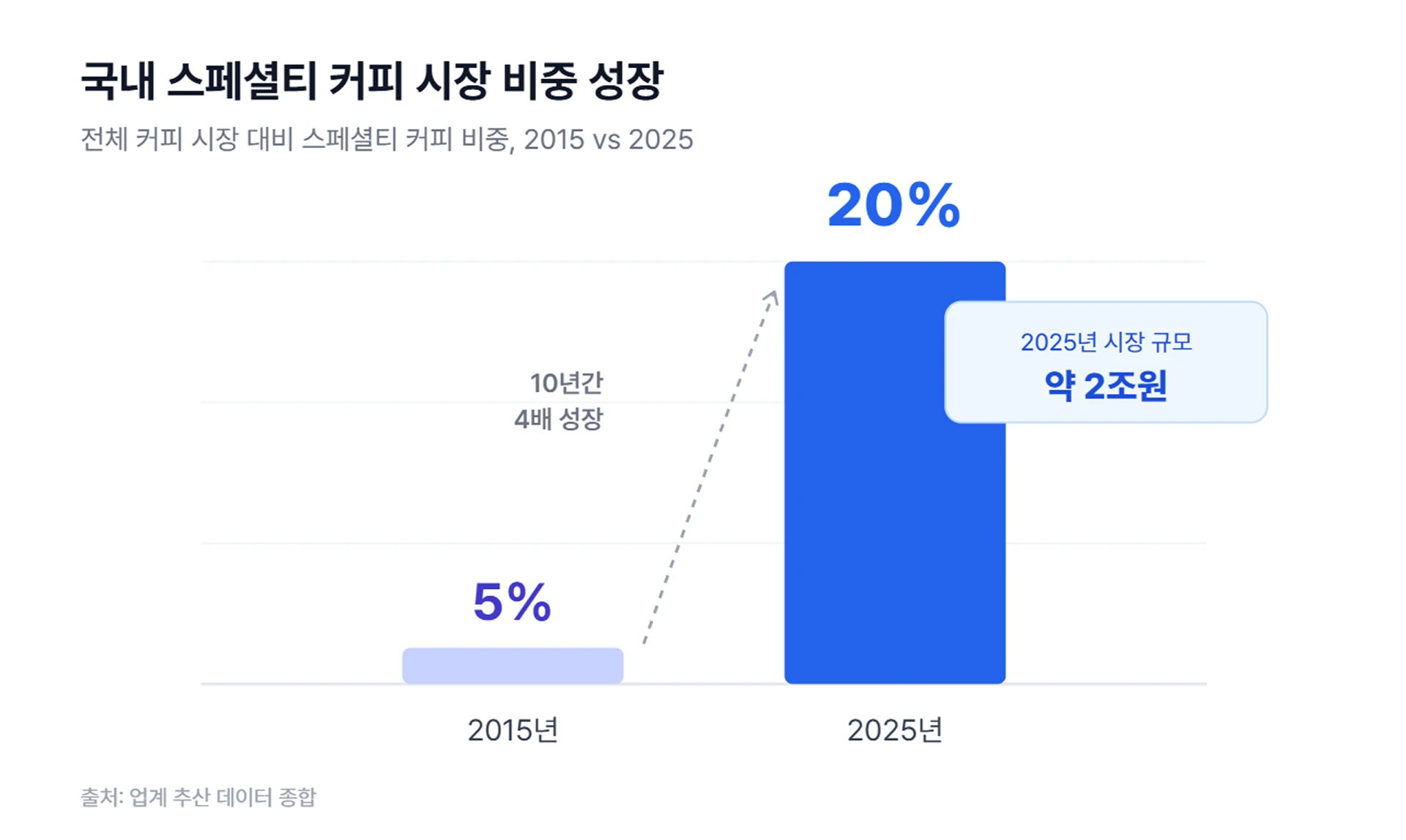
The domestic specialty coffee market accounted for only around 5% of the total coffee market in 2015, but is currently estimated to have grown to around 20%, or about 2 trillion won in scale. The share has nearly quadrupled in 10 years. In Opensurvey's 'Cafe Trend Report 2025', consumers also picked 'bean quality' (58.4%) as the biggest criterion for judging a premium cafe, meaning that taste rather than interior design, price, or location determines the brand image. The criterion for selection is not price, but the quality and individuality of the beans.
As of the first quarter of 2025, the number of domestic cafes decreased for the first time since statistics were compiled. As the market reaches saturation, the question of 'how to differentiate' has become much clearer.
At the same time, the market is clearly becoming polarized. As seen by the entry of foreign premium brands into the domestic market like wildfire, the number of customers looking for specialty coffee costing more than 5,000 won a cup is increasing, while the ultra-low-priced coffee market is also growing in size. As a result, from the perspective of franchise headquarters, they can no longer just choose one of the two trends; even brands that have stayed in low-price competition find themselves in a situation where they can no longer ignore the 'quality image.'

Franchise Headquarters Mobilize
In line with this trend, franchise headquarters are continuing to make various attempts. A Twosome Place expanded its single-origin lineup from only selling the Ethiopia Yirgacheffe Aricha line to adding Central and South American (Guatemala Antigua) and Oceanian (Papua New Guinea Ulya) beans on its 20th anniversary in 2022 to form a 3-continent single-origin selection, and now operates a medium-roast blend as an Americano bean option. Starbucks Korea's Reserve had focused on increasing the number of stores since its introduction in 2014, but in recent years has shifted its direction toward a 'Reserve-only store' approach, leaving only a few key hubs in city centers.
Ediya is also trying to capture both 'cost-effectiveness' and 'specialty' images simultaneously by selling single-origin beans such as Colombia Supremo and Ethiopia Limmu as separate products. Paul Bassett, which initially launched with a specialty positioning, recently introduced the Geisha G Blend at its Gangnam branch, making it the only franchise cafe to sell Geisha at all times.
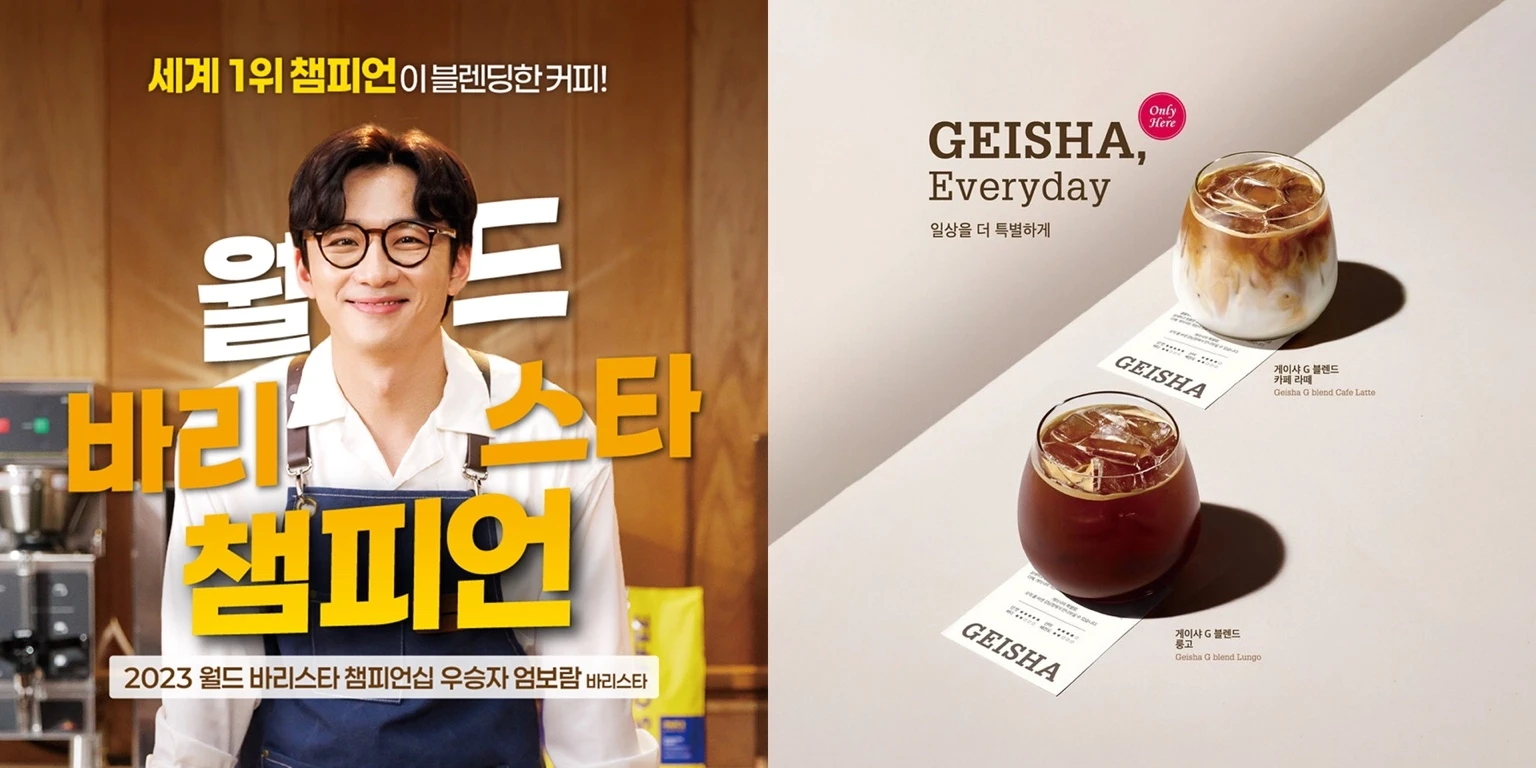
(Left) Paik's Coffee collaborating with WBC Champion Boram Um / (Right) Paul Bassett featuring Geisha Blend at all times
The approach for low-cost franchises is somewhat different. In 2020, low-cost coffee brands had around 3,000 stores, but now the market has ballooned significantly, with Mega Coffee alone exceeding 4,000 stores. As the number of stores has increased as much as possible, there is less room to lower prices further, and they must focus more on the 'quality story.'
In fact, looking at a comparison article of the four major low-cost coffee companies released early this year, Paik's Coffee increased its specialty bean content from 10% to 20% starting in the first half of last year. Compose Coffee uses a 5% blend of specialty coffee from Minas Gerais, Brazil (SCA 82 points), and The Venti has added custom roasting and water-quenching techniques to its 5% level of blend. Mega Coffee is responding with the phrase '100% Premium Arabica.' The industry also explains this phenomenon as a kind of 'contrarian thinking.' Low-cost Americanos are already loss-leader products with a cost ratio of around 40%, leaving almost no margin, so if they are not going to make a profit anyway, it is better to raise the brand image even if it means using slightly more premium beans.
Why Dark Roast Beans Remain the Mainstay
Looking only at this, it seems like franchises have hopped onto the specialty trend quite actively. However, the specialty blending ratio of the four major low-cost coffee companies is still at the 5 to 20% level, and even in premium lines, Reserve or single-origin options often exist as 'special lines.' The basic espresso base in stores is still mostly dark roasts.
Unlike independent cafes, franchises must produce the same taste across dozens or hundreds of stores as a condition of survival. Consumers expect the same taste when they visit a franchise, regardless of the area the store is located in. Dark roast beans show less variation in taste even if the store, branch, or barista's skill level varies, making it the safest choice for headquarters that prioritize uniformity and reproducibility. On the other hand, light or medium roast beans are easy to become overly sour or watery with even a slight variable mismatch, making them a high-risk option in multi-store operations.
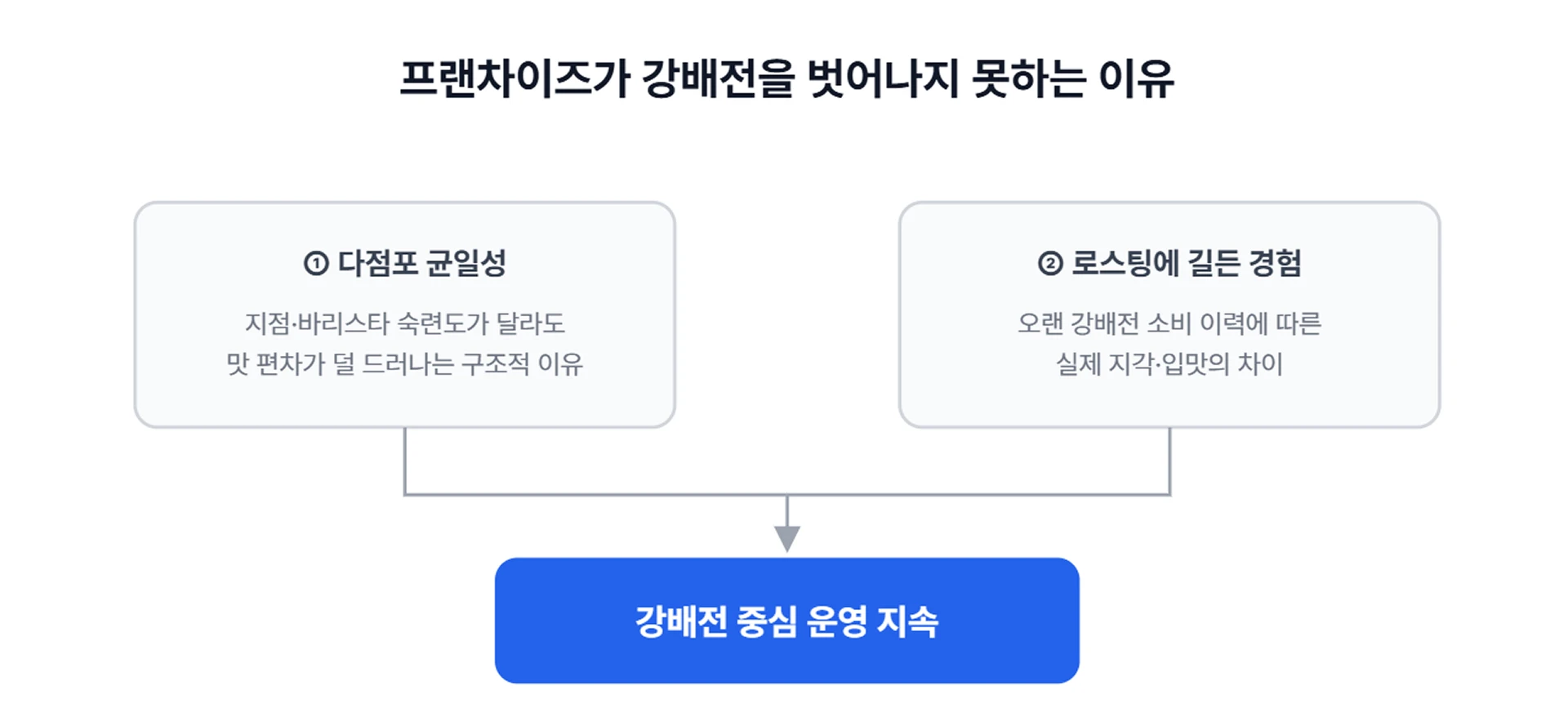
Furthermore, domestic research (Kim & Lee, 2013) also showed that Korean sensory evaluation subjects preferred a savory taste over acidity, which is believed to be linked to their consumption history, where most coffee distributed in Korea was focused on instant and commercial dark roasting. In an actual experiment, when people who had long been accustomed to the Starbucks-style dark roast were given high-quality light roast beans (Panama Geisha), they reacted by saying, "It tastes watery and doesn't taste like coffee." Rather than taste preference itself, it is closer to being unfamiliar due to 'experience' bred by dark roasts.
However, the problem is that consumer experiences are changing little by little. The growing revenue of the specialty coffee market also proves this. So, how can franchises lead the market trend without losing uniformity?
To Handle Quality Beans
Improving bean quality doesn't simply mean using high-quality green beans. Whether it's acidity, sweetness, or body, the original characteristic flavor of the beans must be transferred directly into the cup to complete a 'high-quality coffee.' However, as the bean grade goes up and the roasting becomes lighter, this task becomes much more sensitive.
In particular, light and medium-roasted beans, which are common in specialty coffee, are especially difficult to handle. Because the cells expand less during roasting, they are denser and harder than dark-roasted beans. Since the spaces between the particles are narrow, there is high resistance along the path of the water, and 'channeling,' where the water flows through a single channel, is also likely to occur. In short, it is easy to produce an uneven, mediocre taste.
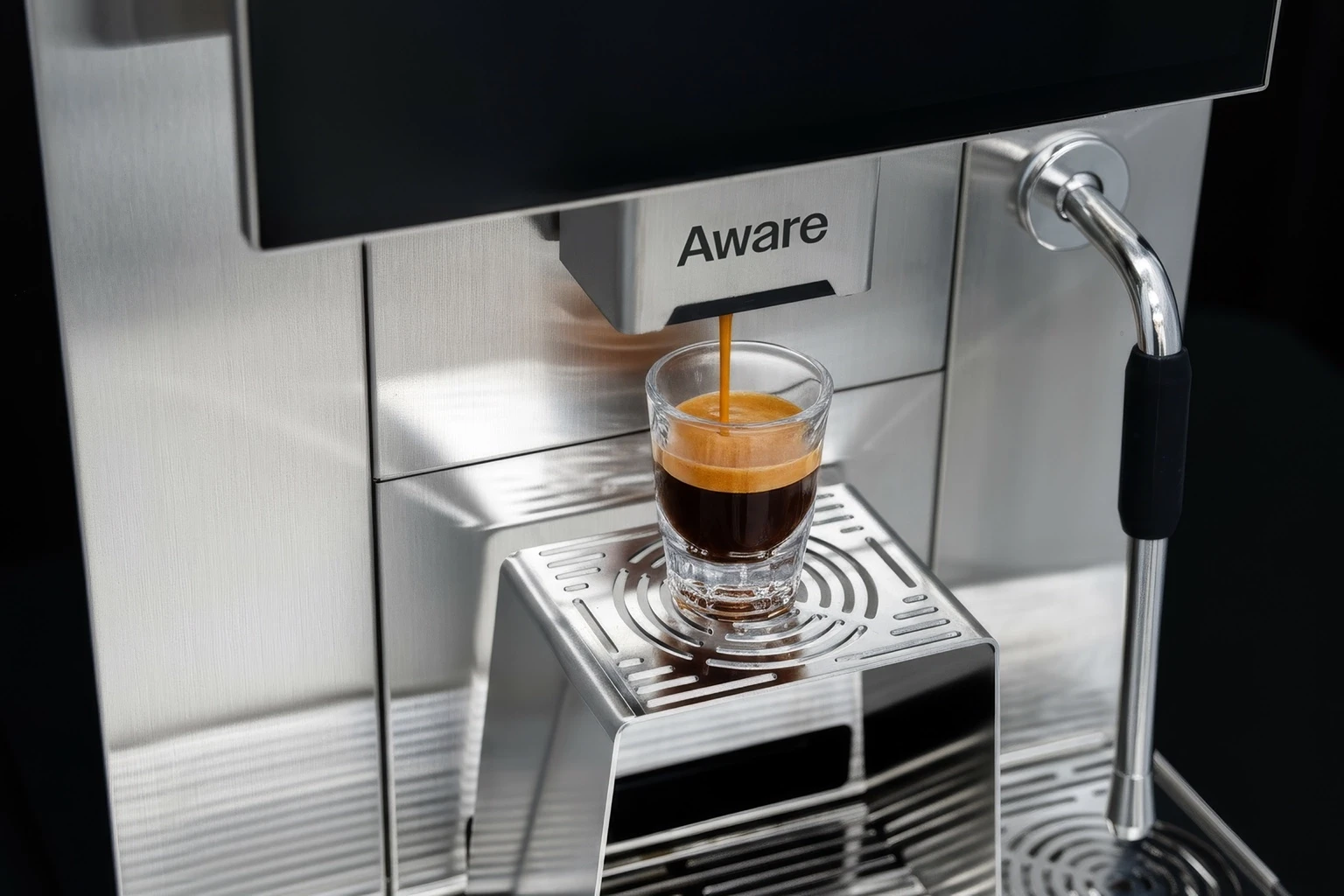
Therefore, to realize quality flavor, several factors must align simultaneously. First of all, temperature is important; because the density is high and the components do not dissolve easily, if the temperature is low, the coffee may not be sufficiently extracted no matter how the grind size is adjusted. In addition, precisely adjusting the grind size is important, and a pre-infusion process that evenly wets the beans with low pressure at the beginning of extraction is necessary to spread the water evenly and reduce channeling. Instead of maintaining constant pressure throughout extraction, the pressure in the early and late stages must be different to bring out the sweetness and body hidden behind the acidity.
Temperature, grind size, pre-infusion, pressure by stage, and so on. Replicating all of these variables simultaneously, and exactly the same way in every store, is a major challenge. Rather than a highly skilled barista adjusting these intuitively with a semi-automatic machine, hardware that can finely control these variables is required to implement them uniformly across multiple stores with fully automatic machines. No matter how good the beans selected by the headquarters are and how good the recipe developed is, if the machine in the store cannot support this level of precision, it ultimately ends up as just a recipe on paper.
Nevertheless, Limited Choices
The problem is that there is no suitable equipment to realize that level of sophistication. The current espresso machine market is largely divided into semi-automatic and fully automatic, and both have their own limitations.
Semi-automatic machines allow fine control over pressure and temperature, meaning they can theoretically extract the flavor of high-quality beans with precision. However, that precision ultimately depends on the skill level of the barista in that store on that day. Franchises have dozens or hundreds of stores, and deploying and maintaining skilled personnel equally across all branches is not easy in itself. In fact, according to the Ministry of Employment and Labor's Establishments Labor Force Survey (2022), the turnover rate in the accommodation and food service industry was 9.7%, which is nearly double the average for all industries (5.1%). In a survey of 207 food service industry workers by the Korea Foodservice Industry Research Institute, 74.9% responded that they are experiencing labor shortages. This is why relying on semi-automatic machines is difficult to sustain long-term across multiple stores.
On the other hand, fully automatic machines were not the answer either. First, fully automatic machines capable of pressure control at each extraction stage are rare. Espresso machine pumps are largely divided into vibration pumps, rotary pumps, and gear pumps, and most fully automatic machines developed so far use rotary pumps. While they stably generate high pressure and have high consistency in extraction results, they have limitations in terms of 'variable pressure profiling,' which finely changes pressure at different stages. In fact, this profiling of pressure has been considered the domain of expensive semi-automatic machines like Slayer or La Marzocco Strada EP that use gear pumps. As another example, pre-infusion technology that reduces channeling is hard to find outside of expensive high-end machines like Thermoplan or Eversys. For these reasons, they were consistent, but the taste was somewhat flat.
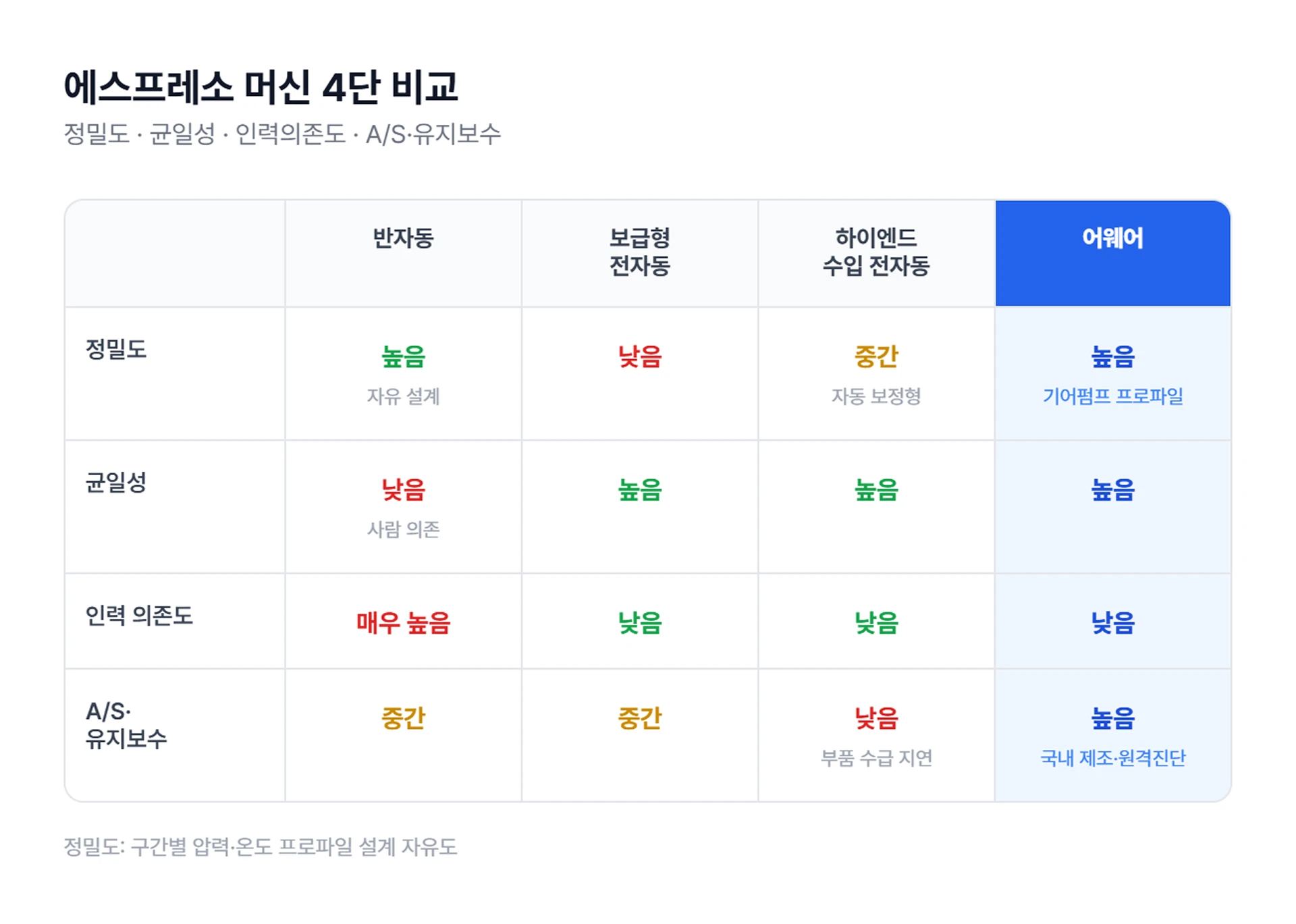
In the end, from the perspective of franchise headquarters, they were in a situation where they had to choose between semi-automatic, which is sophisticated but relies on humans, or fully automatic, which is uniform but has flat tastes.
Aware, as an exceptional fully automatic machine equipped with a variable pressure gear pump, suggests a solution to this dilemma. Using a gear pump in which two gears mesh and rotate, it is possible to map out profiles such as raising or lowering pressure on a second-by-second basis. A sophisticated recipe can be made by applying strong pressure in the beginning to quickly extract flavor components, and lowering the pressure in the later stage of extraction to reduce unwanted bitter tastes from spilling over. Furthermore, unlike other machines that show dashboard-style UIs, it can be designed intuitively in the form of a graph visible at a glance via a 13-inch touchscreen.
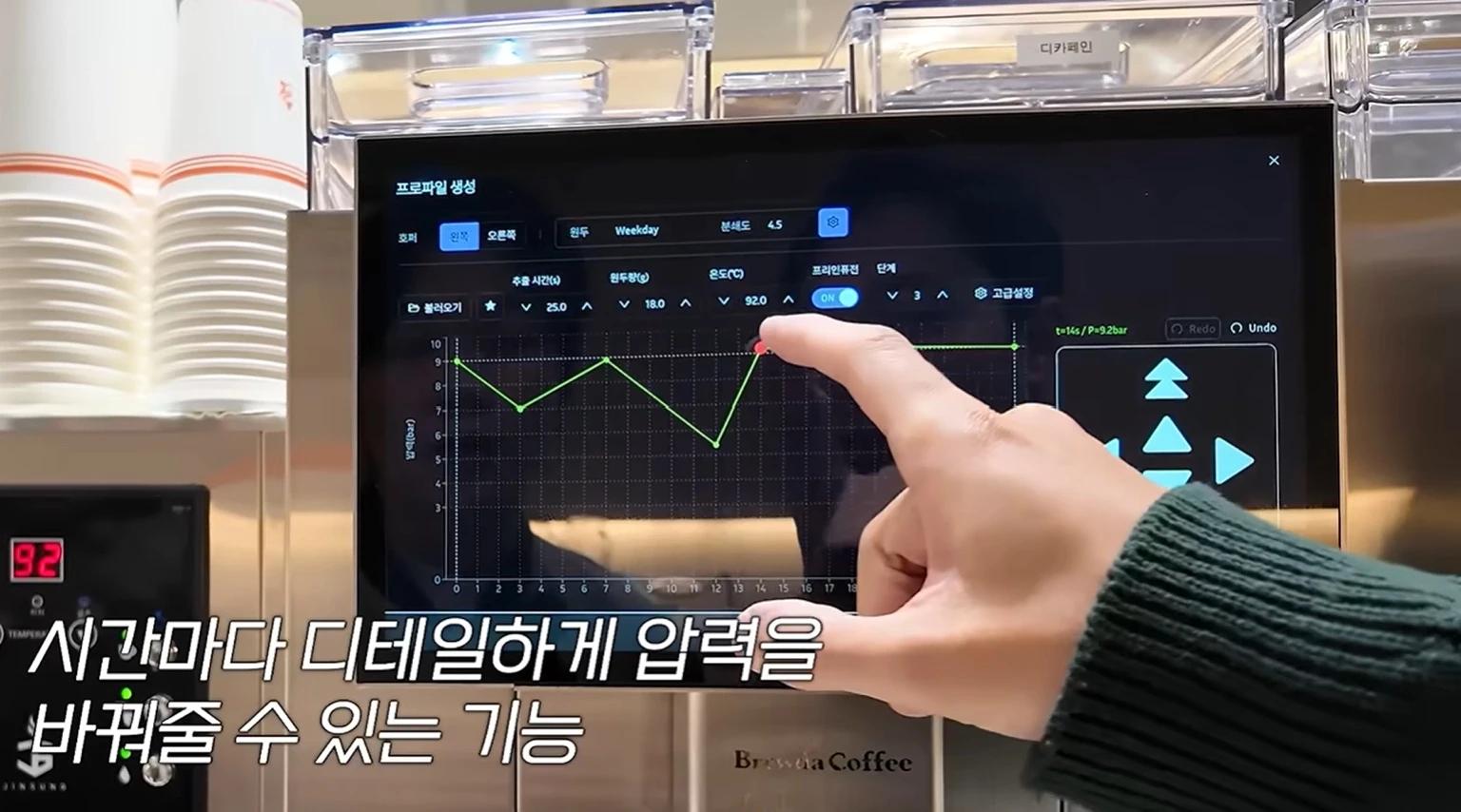
(Source: Captured from 'Anstar' YouTube content https://www.youtube.com/watch?v=r-rT-skItXs)
Temperature and amount of ground coffee, which are key variables determining coffee taste, can also be controlled in increments of 0.1°C and 0.1g, adding to flexibility. Additionally, the grind size can be micro-adjusted to match even the delicate density differences characteristic of light roast beans. Recipes crafted this way are saved to the cloud and deployed directly to machines at all locations, with real-time TDS verification correcting any deviations that occur from branch to branch. This allows the taste designed by headquarters to be replicated at every store without human intervention. (The principle of the variable pressure pump was covered in more detail in the previous [Aware Insight 01] post.)
Closing
Among the latest specialty trends, establishing a framework to replicate high-quality coffee in all stores could provide growth momentum for franchise headquarters. Please stay tuned to see how Aware will reshape the market together with franchises.
Specialty Coffee: From Taste to Market
While there are many reasons for choosing a cafe, such as price, atmosphere, or accessibility, in the end, it is the 'taste of coffee' that makes people return. Data from the past few years has shown that standards for this taste are rising quite rapidly.
The domestic specialty coffee market accounted for only around 5% of the total coffee market in 2015, but is currently estimated to have grown to around 20%, or about 2 trillion won in scale. The share has nearly quadrupled in 10 years. In Opensurvey's 'Cafe Trend Report 2025', consumers also picked 'bean quality' (58.4%) as the biggest criterion for judging a premium cafe, meaning that taste rather than interior design, price, or location determines the brand image. The criterion for selection is not price, but the quality and individuality of the beans.
As of the first quarter of 2025, the number of domestic cafes decreased for the first time since statistics were compiled. As the market reaches saturation, the question of 'how to differentiate' has become much clearer.
At the same time, the market is clearly becoming polarized. As seen by the entry of foreign premium brands into the domestic market like wildfire, the number of customers looking for specialty coffee costing more than 5,000 won a cup is increasing, while the ultra-low-priced coffee market is also growing in size. As a result, from the perspective of franchise headquarters, they can no longer just choose one of the two trends; even brands that have stayed in low-price competition find themselves in a situation where they can no longer ignore the 'quality image.'
Franchise Headquarters Mobilize
In line with this trend, franchise headquarters are continuing to make various attempts. A Twosome Place expanded its single-origin lineup from only selling the Ethiopia Yirgacheffe Aricha line to adding Central and South American (Guatemala Antigua) and Oceanian (Papua New Guinea Ulya) beans on its 20th anniversary in 2022 to form a 3-continent single-origin selection, and now operates a medium-roast blend as an Americano bean option. Starbucks Korea's Reserve had focused on increasing the number of stores since its introduction in 2014, but in recent years has shifted its direction toward a 'Reserve-only store' approach, leaving only a few key hubs in city centers.
Ediya is also trying to capture both 'cost-effectiveness' and 'specialty' images simultaneously by selling single-origin beans such as Colombia Supremo and Ethiopia Limmu as separate products. Paul Bassett, which initially launched with a specialty positioning, recently introduced the Geisha G Blend at its Gangnam branch, making it the only franchise cafe to sell Geisha at all times.
(Left) Paik's Coffee collaborating with WBC Champion Boram Um / (Right) Paul Bassett featuring Geisha Blend at all times
The approach for low-cost franchises is somewhat different. In 2020, low-cost coffee brands had around 3,000 stores, but now the market has ballooned significantly, with Mega Coffee alone exceeding 4,000 stores. As the number of stores has increased as much as possible, there is less room to lower prices further, and they must focus more on the 'quality story.'
In fact, looking at a comparison article of the four major low-cost coffee companies released early this year, Paik's Coffee increased its specialty bean content from 10% to 20% starting in the first half of last year. Compose Coffee uses a 5% blend of specialty coffee from Minas Gerais, Brazil (SCA 82 points), and The Venti has added custom roasting and water-quenching techniques to its 5% level of blend. Mega Coffee is responding with the phrase '100% Premium Arabica.' The industry also explains this phenomenon as a kind of 'contrarian thinking.' Low-cost Americanos are already loss-leader products with a cost ratio of around 40%, leaving almost no margin, so if they are not going to make a profit anyway, it is better to raise the brand image even if it means using slightly more premium beans.
Why Dark Roast Beans Remain the Mainstay
Looking only at this, it seems like franchises have hopped onto the specialty trend quite actively. However, the specialty blending ratio of the four major low-cost coffee companies is still at the 5 to 20% level, and even in premium lines, Reserve or single-origin options often exist as 'special lines.' The basic espresso base in stores is still mostly dark roasts.
Unlike independent cafes, franchises must produce the same taste across dozens or hundreds of stores as a condition of survival. Consumers expect the same taste when they visit a franchise, regardless of the area the store is located in. Dark roast beans show less variation in taste even if the store, branch, or barista's skill level varies, making it the safest choice for headquarters that prioritize uniformity and reproducibility. On the other hand, light or medium roast beans are easy to become overly sour or watery with even a slight variable mismatch, making them a high-risk option in multi-store operations.
Furthermore, domestic research (Kim & Lee, 2013) also showed that Korean sensory evaluation subjects preferred a savory taste over acidity, which is believed to be linked to their consumption history, where most coffee distributed in Korea was focused on instant and commercial dark roasting. In an actual experiment, when people who had long been accustomed to the Starbucks-style dark roast were given high-quality light roast beans (Panama Geisha), they reacted by saying, "It tastes watery and doesn't taste like coffee." Rather than taste preference itself, it is closer to being unfamiliar due to 'experience' bred by dark roasts.
However, the problem is that consumer experiences are changing little by little. The growing revenue of the specialty coffee market also proves this. So, how can franchises lead the market trend without losing uniformity?
To Handle Quality Beans
Improving bean quality doesn't simply mean using high-quality green beans. Whether it's acidity, sweetness, or body, the original characteristic flavor of the beans must be transferred directly into the cup to complete a 'high-quality coffee.' However, as the bean grade goes up and the roasting becomes lighter, this task becomes much more sensitive.
In particular, light and medium-roasted beans, which are common in specialty coffee, are especially difficult to handle. Because the cells expand less during roasting, they are denser and harder than dark-roasted beans. Since the spaces between the particles are narrow, there is high resistance along the path of the water, and 'channeling,' where the water flows through a single channel, is also likely to occur. In short, it is easy to produce an uneven, mediocre taste.
Therefore, to realize quality flavor, several factors must align simultaneously. First of all, temperature is important; because the density is high and the components do not dissolve easily, if the temperature is low, the coffee may not be sufficiently extracted no matter how the grind size is adjusted. In addition, precisely adjusting the grind size is important, and a pre-infusion process that evenly wets the beans with low pressure at the beginning of extraction is necessary to spread the water evenly and reduce channeling. Instead of maintaining constant pressure throughout extraction, the pressure in the early and late stages must be different to bring out the sweetness and body hidden behind the acidity.
Temperature, grind size, pre-infusion, pressure by stage, and so on. Replicating all of these variables simultaneously, and exactly the same way in every store, is a major challenge. Rather than a highly skilled barista adjusting these intuitively with a semi-automatic machine, hardware that can finely control these variables is required to implement them uniformly across multiple stores with fully automatic machines. No matter how good the beans selected by the headquarters are and how good the recipe developed is, if the machine in the store cannot support this level of precision, it ultimately ends up as just a recipe on paper.
Nevertheless, Limited Choices
The problem is that there is no suitable equipment to realize that level of sophistication. The current espresso machine market is largely divided into semi-automatic and fully automatic, and both have their own limitations.
Semi-automatic machines allow fine control over pressure and temperature, meaning they can theoretically extract the flavor of high-quality beans with precision. However, that precision ultimately depends on the skill level of the barista in that store on that day. Franchises have dozens or hundreds of stores, and deploying and maintaining skilled personnel equally across all branches is not easy in itself. In fact, according to the Ministry of Employment and Labor's Establishments Labor Force Survey (2022), the turnover rate in the accommodation and food service industry was 9.7%, which is nearly double the average for all industries (5.1%). In a survey of 207 food service industry workers by the Korea Foodservice Industry Research Institute, 74.9% responded that they are experiencing labor shortages. This is why relying on semi-automatic machines is difficult to sustain long-term across multiple stores.
On the other hand, fully automatic machines were not the answer either. First, fully automatic machines capable of pressure control at each extraction stage are rare. Espresso machine pumps are largely divided into vibration pumps, rotary pumps, and gear pumps, and most fully automatic machines developed so far use rotary pumps. While they stably generate high pressure and have high consistency in extraction results, they have limitations in terms of 'variable pressure profiling,' which finely changes pressure at different stages. In fact, this profiling of pressure has been considered the domain of expensive semi-automatic machines like Slayer or La Marzocco Strada EP that use gear pumps. As another example, pre-infusion technology that reduces channeling is hard to find outside of expensive high-end machines like Thermoplan or Eversys. For these reasons, they were consistent, but the taste was somewhat flat.
In the end, from the perspective of franchise headquarters, they were in a situation where they had to choose between semi-automatic, which is sophisticated but relies on humans, or fully automatic, which is uniform but has flat tastes.
Aware, as an exceptional fully automatic machine equipped with a variable pressure gear pump, suggests a solution to this dilemma. Using a gear pump in which two gears mesh and rotate, it is possible to map out profiles such as raising or lowering pressure on a second-by-second basis. A sophisticated recipe can be made by applying strong pressure in the beginning to quickly extract flavor components, and lowering the pressure in the later stage of extraction to reduce unwanted bitter tastes from spilling over. Furthermore, unlike other machines that show dashboard-style UIs, it can be designed intuitively in the form of a graph visible at a glance via a 13-inch touchscreen.
(Source: Captured from 'Anstar' YouTube content https://www.youtube.com/watch?v=r-rT-skItXs)
Temperature and amount of ground coffee, which are key variables determining coffee taste, can also be controlled in increments of 0.1°C and 0.1g, adding to flexibility. Additionally, the grind size can be micro-adjusted to match even the delicate density differences characteristic of light roast beans. Recipes crafted this way are saved to the cloud and deployed directly to machines at all locations, with real-time TDS verification correcting any deviations that occur from branch to branch. This allows the taste designed by headquarters to be replicated at every store without human intervention. (The principle of the variable pressure pump was covered in more detail in the previous [Aware Insight 01] post.)
Closing
Among the latest specialty trends, establishing a framework to replicate high-quality coffee in all stores could provide growth momentum for franchise headquarters. Please stay tuned to see how Aware will reshape the market together with franchises.
Specialty Coffee: From Taste to Market
While there are many reasons for choosing a cafe, such as price, atmosphere, or accessibility, in the end, it is the 'taste of coffee' that makes people return. Data from the past few years has shown that standards for this taste are rising quite rapidly.
The domestic specialty coffee market accounted for only around 5% of the total coffee market in 2015, but is currently estimated to have grown to around 20%, or about 2 trillion won in scale. The share has nearly quadrupled in 10 years. In Opensurvey's 'Cafe Trend Report 2025', consumers also picked 'bean quality' (58.4%) as the biggest criterion for judging a premium cafe, meaning that taste rather than interior design, price, or location determines the brand image. The criterion for selection is not price, but the quality and individuality of the beans.
As of the first quarter of 2025, the number of domestic cafes decreased for the first time since statistics were compiled. As the market reaches saturation, the question of 'how to differentiate' has become much clearer.
At the same time, the market is clearly becoming polarized. As seen by the entry of foreign premium brands into the domestic market like wildfire, the number of customers looking for specialty coffee costing more than 5,000 won a cup is increasing, while the ultra-low-priced coffee market is also growing in size. As a result, from the perspective of franchise headquarters, they can no longer just choose one of the two trends; even brands that have stayed in low-price competition find themselves in a situation where they can no longer ignore the 'quality image.'
Franchise Headquarters Mobilize
In line with this trend, franchise headquarters are continuing to make various attempts. A Twosome Place expanded its single-origin lineup from only selling the Ethiopia Yirgacheffe Aricha line to adding Central and South American (Guatemala Antigua) and Oceanian (Papua New Guinea Ulya) beans on its 20th anniversary in 2022 to form a 3-continent single-origin selection, and now operates a medium-roast blend as an Americano bean option. Starbucks Korea's Reserve had focused on increasing the number of stores since its introduction in 2014, but in recent years has shifted its direction toward a 'Reserve-only store' approach, leaving only a few key hubs in city centers.
Ediya is also trying to capture both 'cost-effectiveness' and 'specialty' images simultaneously by selling single-origin beans such as Colombia Supremo and Ethiopia Limmu as separate products. Paul Bassett, which initially launched with a specialty positioning, recently introduced the Geisha G Blend at its Gangnam branch, making it the only franchise cafe to sell Geisha at all times.
(Left) Paik's Coffee collaborating with WBC Champion Boram Um / (Right) Paul Bassett featuring Geisha Blend at all times
The approach for low-cost franchises is somewhat different. In 2020, low-cost coffee brands had around 3,000 stores, but now the market has ballooned significantly, with Mega Coffee alone exceeding 4,000 stores. As the number of stores has increased as much as possible, there is less room to lower prices further, and they must focus more on the 'quality story.'
In fact, looking at a comparison article of the four major low-cost coffee companies released early this year, Paik's Coffee increased its specialty bean content from 10% to 20% starting in the first half of last year. Compose Coffee uses a 5% blend of specialty coffee from Minas Gerais, Brazil (SCA 82 points), and The Venti has added custom roasting and water-quenching techniques to its 5% level of blend. Mega Coffee is responding with the phrase '100% Premium Arabica.' The industry also explains this phenomenon as a kind of 'contrarian thinking.' Low-cost Americanos are already loss-leader products with a cost ratio of around 40%, leaving almost no margin, so if they are not going to make a profit anyway, it is better to raise the brand image even if it means using slightly more premium beans.
Why Dark Roast Beans Remain the Mainstay
Looking only at this, it seems like franchises have hopped onto the specialty trend quite actively. However, the specialty blending ratio of the four major low-cost coffee companies is still at the 5 to 20% level, and even in premium lines, Reserve or single-origin options often exist as 'special lines.' The basic espresso base in stores is still mostly dark roasts.
Unlike independent cafes, franchises must produce the same taste across dozens or hundreds of stores as a condition of survival. Consumers expect the same taste when they visit a franchise, regardless of the area the store is located in. Dark roast beans show less variation in taste even if the store, branch, or barista's skill level varies, making it the safest choice for headquarters that prioritize uniformity and reproducibility. On the other hand, light or medium roast beans are easy to become overly sour or watery with even a slight variable mismatch, making them a high-risk option in multi-store operations.
Furthermore, domestic research (Kim & Lee, 2013) also showed that Korean sensory evaluation subjects preferred a savory taste over acidity, which is believed to be linked to their consumption history, where most coffee distributed in Korea was focused on instant and commercial dark roasting. In an actual experiment, when people who had long been accustomed to the Starbucks-style dark roast were given high-quality light roast beans (Panama Geisha), they reacted by saying, "It tastes watery and doesn't taste like coffee." Rather than taste preference itself, it is closer to being unfamiliar due to 'experience' bred by dark roasts.
However, the problem is that consumer experiences are changing little by little. The growing revenue of the specialty coffee market also proves this. So, how can franchises lead the market trend without losing uniformity?
To Handle Quality Beans
Improving bean quality doesn't simply mean using high-quality green beans. Whether it's acidity, sweetness, or body, the original characteristic flavor of the beans must be transferred directly into the cup to complete a 'high-quality coffee.' However, as the bean grade goes up and the roasting becomes lighter, this task becomes much more sensitive.
In particular, light and medium-roasted beans, which are common in specialty coffee, are especially difficult to handle. Because the cells expand less during roasting, they are denser and harder than dark-roasted beans. Since the spaces between the particles are narrow, there is high resistance along the path of the water, and 'channeling,' where the water flows through a single channel, is also likely to occur. In short, it is easy to produce an uneven, mediocre taste.
Therefore, to realize quality flavor, several factors must align simultaneously. First of all, temperature is important; because the density is high and the components do not dissolve easily, if the temperature is low, the coffee may not be sufficiently extracted no matter how the grind size is adjusted. In addition, precisely adjusting the grind size is important, and a pre-infusion process that evenly wets the beans with low pressure at the beginning of extraction is necessary to spread the water evenly and reduce channeling. Instead of maintaining constant pressure throughout extraction, the pressure in the early and late stages must be different to bring out the sweetness and body hidden behind the acidity.
Temperature, grind size, pre-infusion, pressure by stage, and so on. Replicating all of these variables simultaneously, and exactly the same way in every store, is a major challenge. Rather than a highly skilled barista adjusting these intuitively with a semi-automatic machine, hardware that can finely control these variables is required to implement them uniformly across multiple stores with fully automatic machines. No matter how good the beans selected by the headquarters are and how good the recipe developed is, if the machine in the store cannot support this level of precision, it ultimately ends up as just a recipe on paper.
Nevertheless, Limited Choices
The problem is that there is no suitable equipment to realize that level of sophistication. The current espresso machine market is largely divided into semi-automatic and fully automatic, and both have their own limitations.
Semi-automatic machines allow fine control over pressure and temperature, meaning they can theoretically extract the flavor of high-quality beans with precision. However, that precision ultimately depends on the skill level of the barista in that store on that day. Franchises have dozens or hundreds of stores, and deploying and maintaining skilled personnel equally across all branches is not easy in itself. In fact, according to the Ministry of Employment and Labor's Establishments Labor Force Survey (2022), the turnover rate in the accommodation and food service industry was 9.7%, which is nearly double the average for all industries (5.1%). In a survey of 207 food service industry workers by the Korea Foodservice Industry Research Institute, 74.9% responded that they are experiencing labor shortages. This is why relying on semi-automatic machines is difficult to sustain long-term across multiple stores.
On the other hand, fully automatic machines were not the answer either. First, fully automatic machines capable of pressure control at each extraction stage are rare. Espresso machine pumps are largely divided into vibration pumps, rotary pumps, and gear pumps, and most fully automatic machines developed so far use rotary pumps. While they stably generate high pressure and have high consistency in extraction results, they have limitations in terms of 'variable pressure profiling,' which finely changes pressure at different stages. In fact, this profiling of pressure has been considered the domain of expensive semi-automatic machines like Slayer or La Marzocco Strada EP that use gear pumps. As another example, pre-infusion technology that reduces channeling is hard to find outside of expensive high-end machines like Thermoplan or Eversys. For these reasons, they were consistent, but the taste was somewhat flat.
In the end, from the perspective of franchise headquarters, they were in a situation where they had to choose between semi-automatic, which is sophisticated but relies on humans, or fully automatic, which is uniform but has flat tastes.
Aware, as an exceptional fully automatic machine equipped with a variable pressure gear pump, suggests a solution to this dilemma. Using a gear pump in which two gears mesh and rotate, it is possible to map out profiles such as raising or lowering pressure on a second-by-second basis. A sophisticated recipe can be made by applying strong pressure in the beginning to quickly extract flavor components, and lowering the pressure in the later stage of extraction to reduce unwanted bitter tastes from spilling over. Furthermore, unlike other machines that show dashboard-style UIs, it can be designed intuitively in the form of a graph visible at a glance via a 13-inch touchscreen.
(Source: Captured from 'Anstar' YouTube content https://www.youtube.com/watch?v=r-rT-skItXs)
Temperature and amount of ground coffee, which are key variables determining coffee taste, can also be controlled in increments of 0.1°C and 0.1g, adding to flexibility. Additionally, the grind size can be micro-adjusted to match even the delicate density differences characteristic of light roast beans. Recipes crafted this way are saved to the cloud and deployed directly to machines at all locations, with real-time TDS verification correcting any deviations that occur from branch to branch. This allows the taste designed by headquarters to be replicated at every store without human intervention. (The principle of the variable pressure pump was covered in more detail in the previous [Aware Insight 01] post.)
Closing
Among the latest specialty trends, establishing a framework to replicate high-quality coffee in all stores could provide growth momentum for franchise headquarters. Please stay tuned to see how Aware will reshape the market together with franchises.
If you are curious about Aware,
try it yourself.
If you are curious about Aware,
try it out for yourself
If you're curious to know more about Awair,
try it out for yourself.
Book a Showroom Visit
Book a Showroom Visit
We've gathered some useful related articles
We've gathered some useful related articles
Brownbag | CEO Jongsu Son | Business Registration Number: 545-81-00180
1st Floor, 39 Banpo-daero 22-gil, Seocho-gu, Seoul | Mail-order Business Report No. 2018-Seoul Seocho-1214
© 2025 Brownbag, Inc.
Brownbag | Representative: Jongsoo Son
Business Registration Number: 545-81-00180
Address: 1st Floor, 39 Banpo-daero 22-gil, Seocho-gu, Seoul
Mail Order Business Report Number: 2018-Seoul Seocho-1214